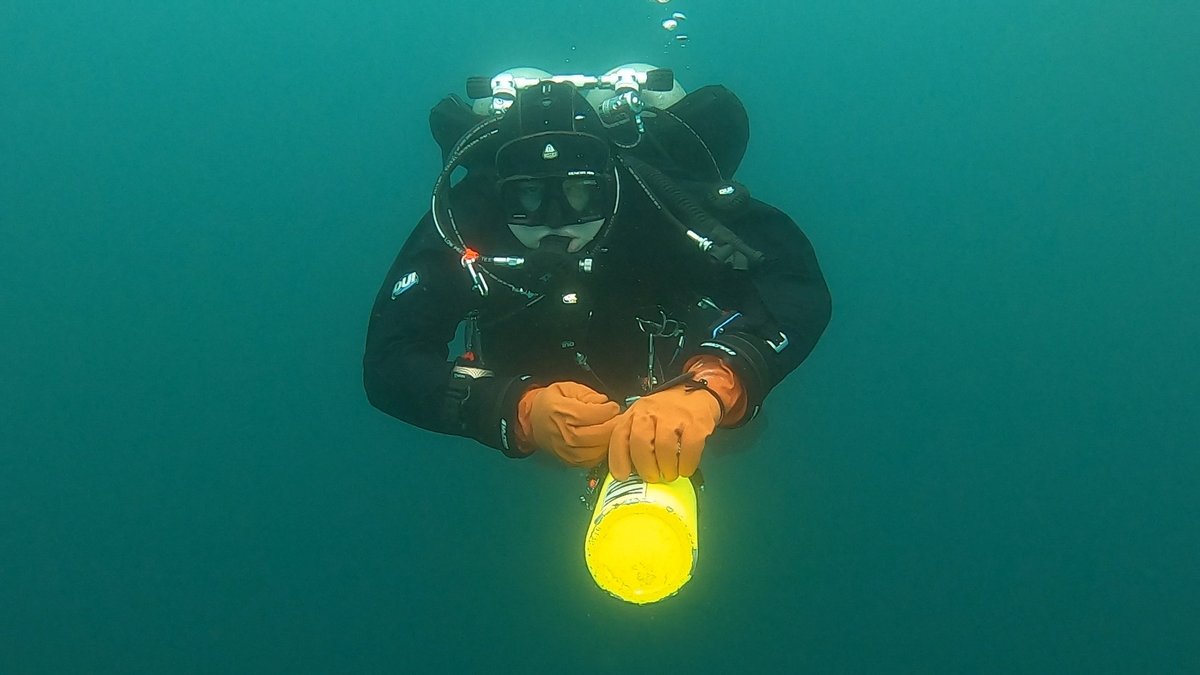
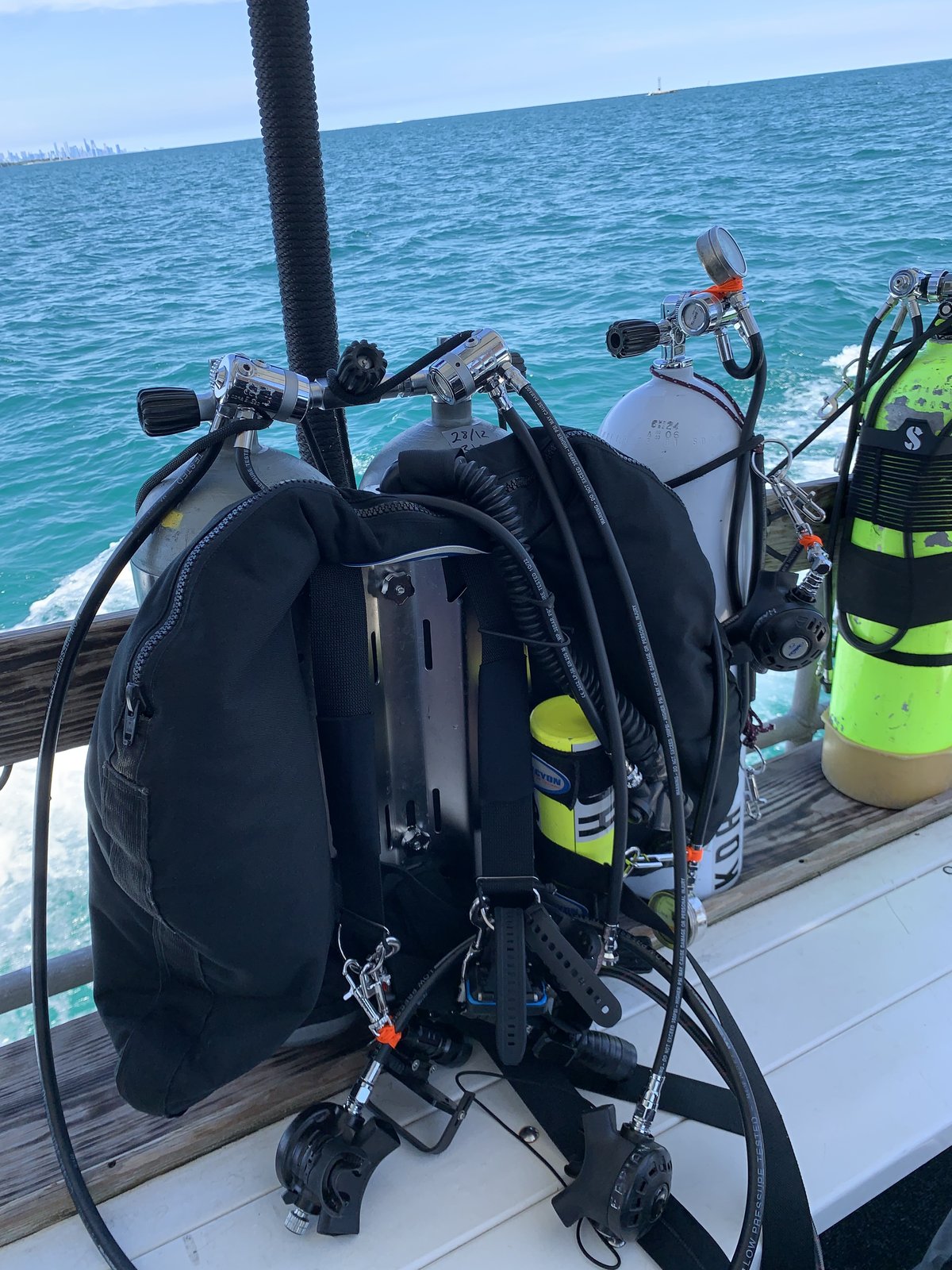
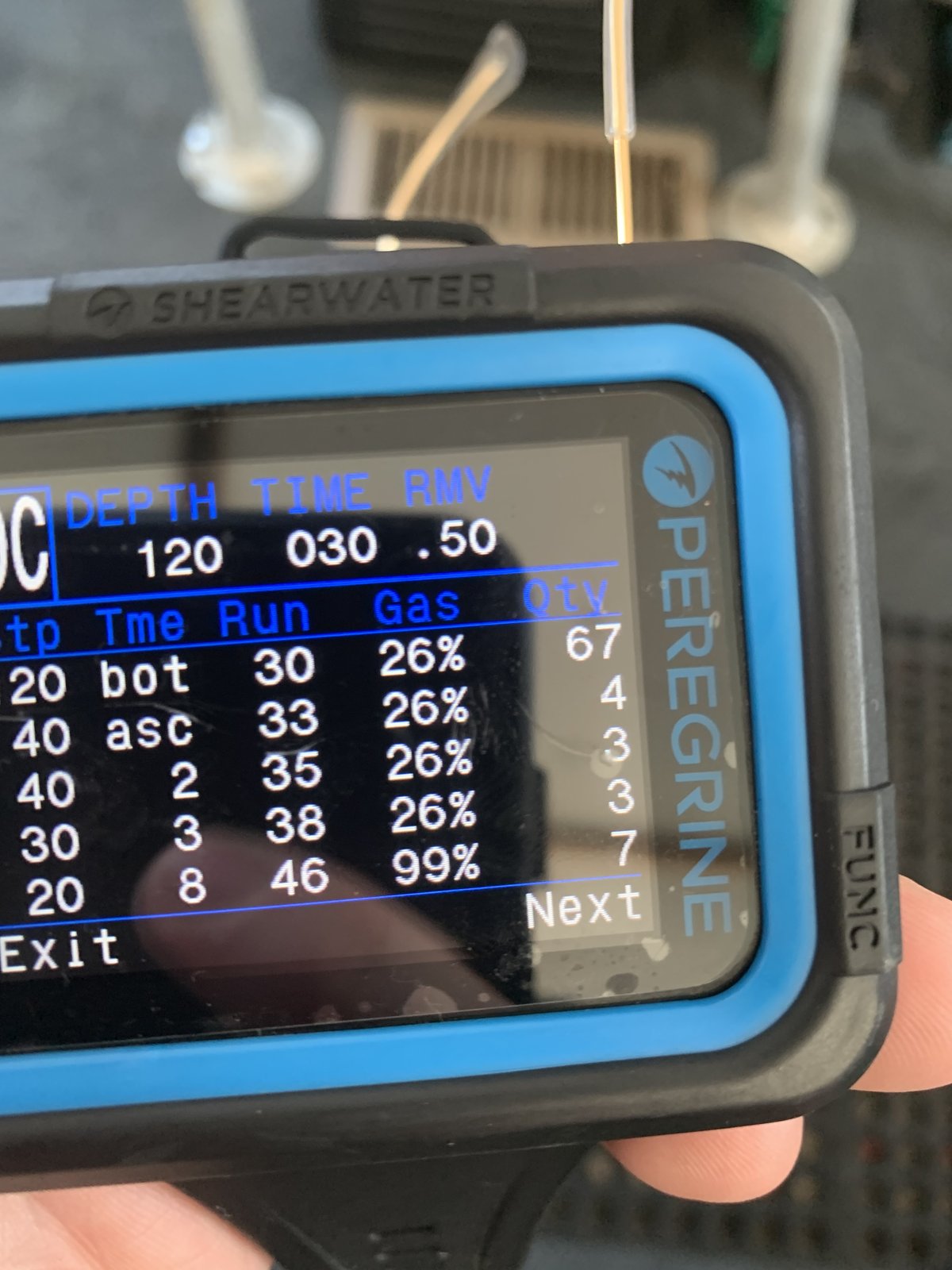
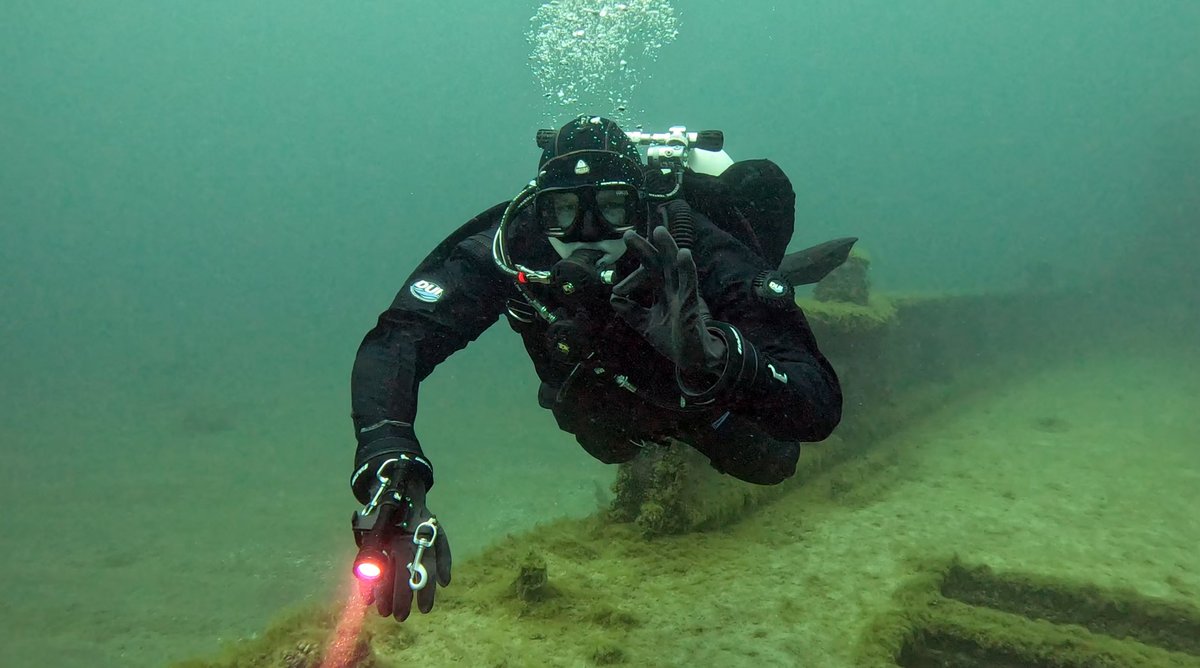
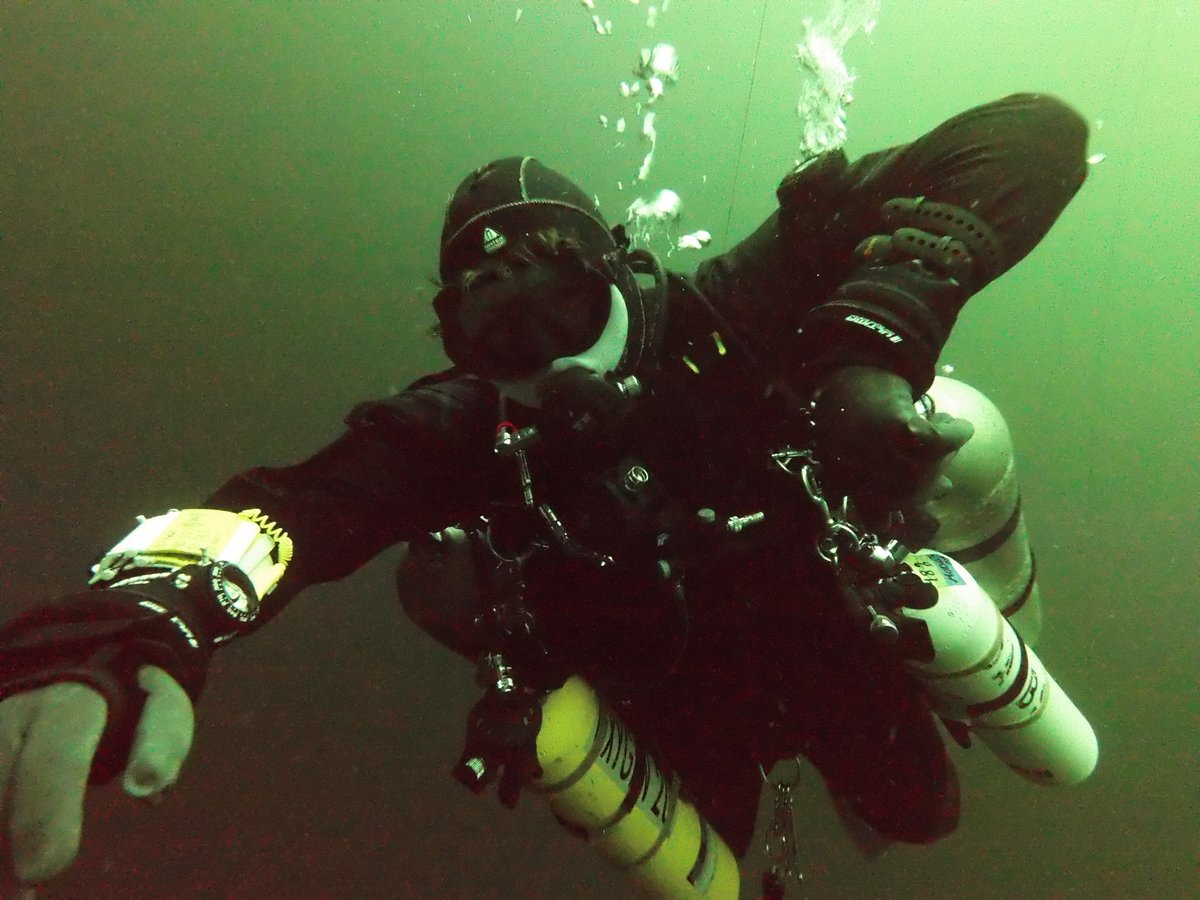
— dives.
One long descent.
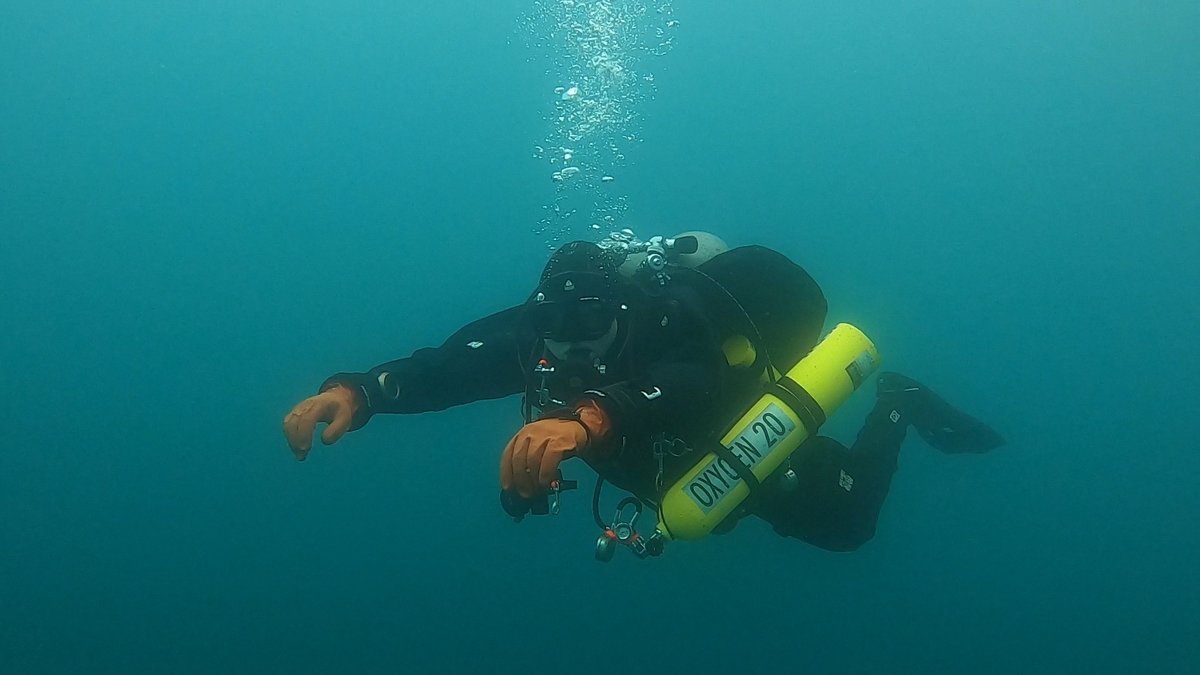
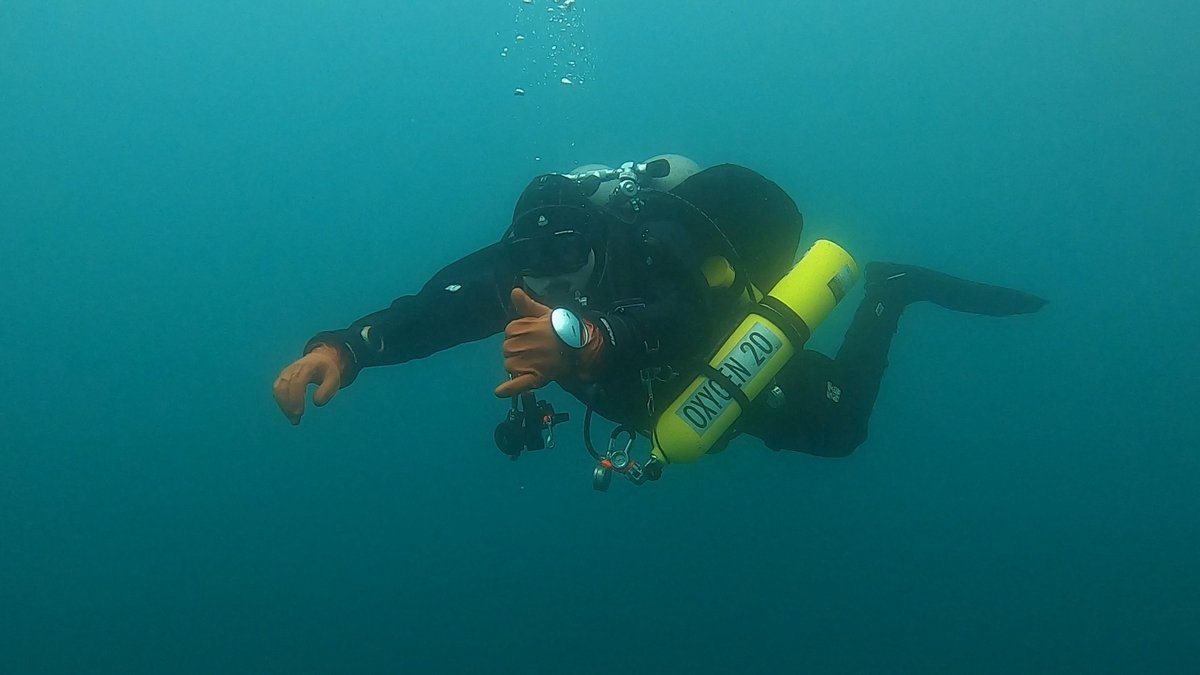
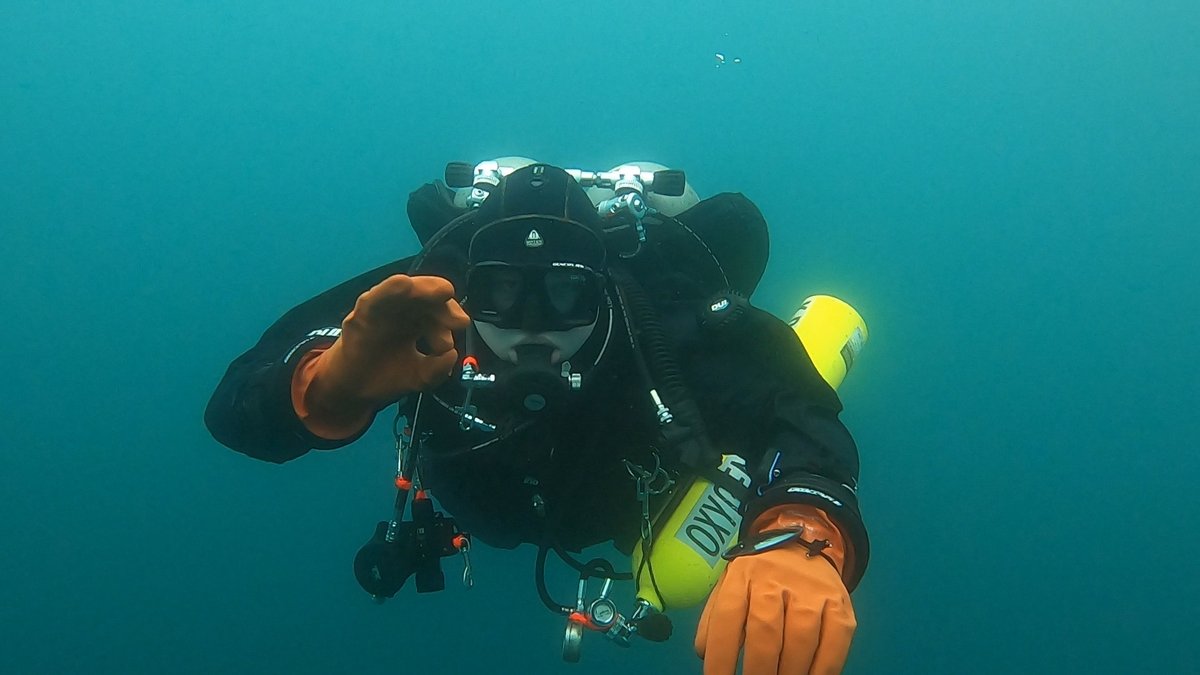
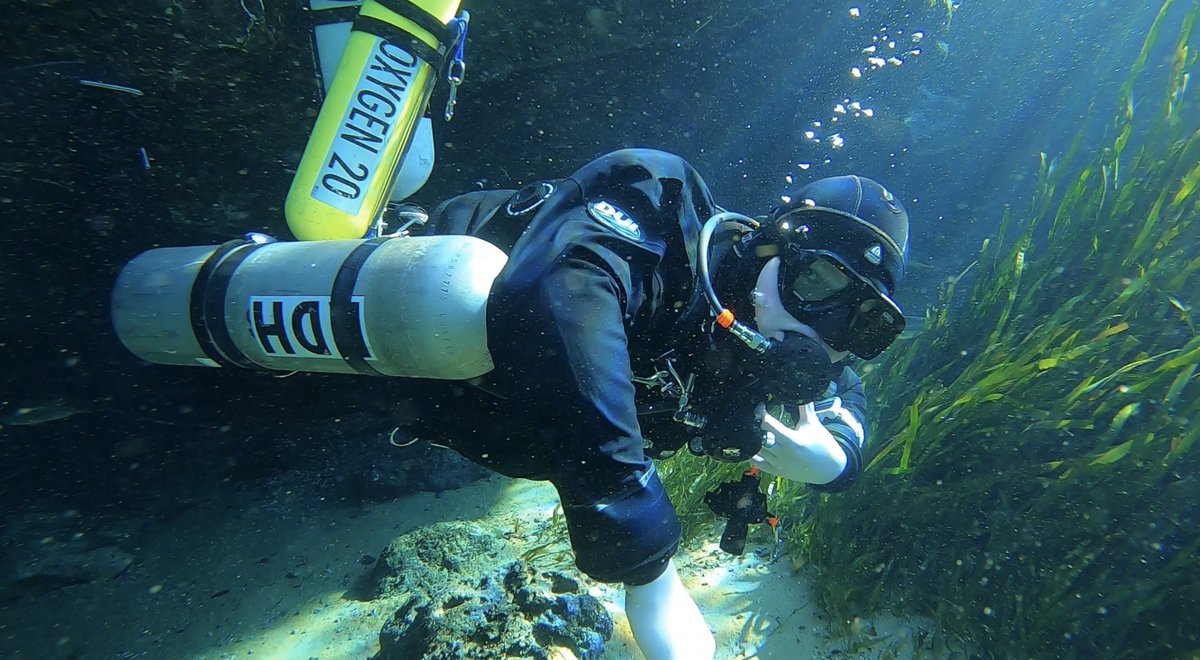
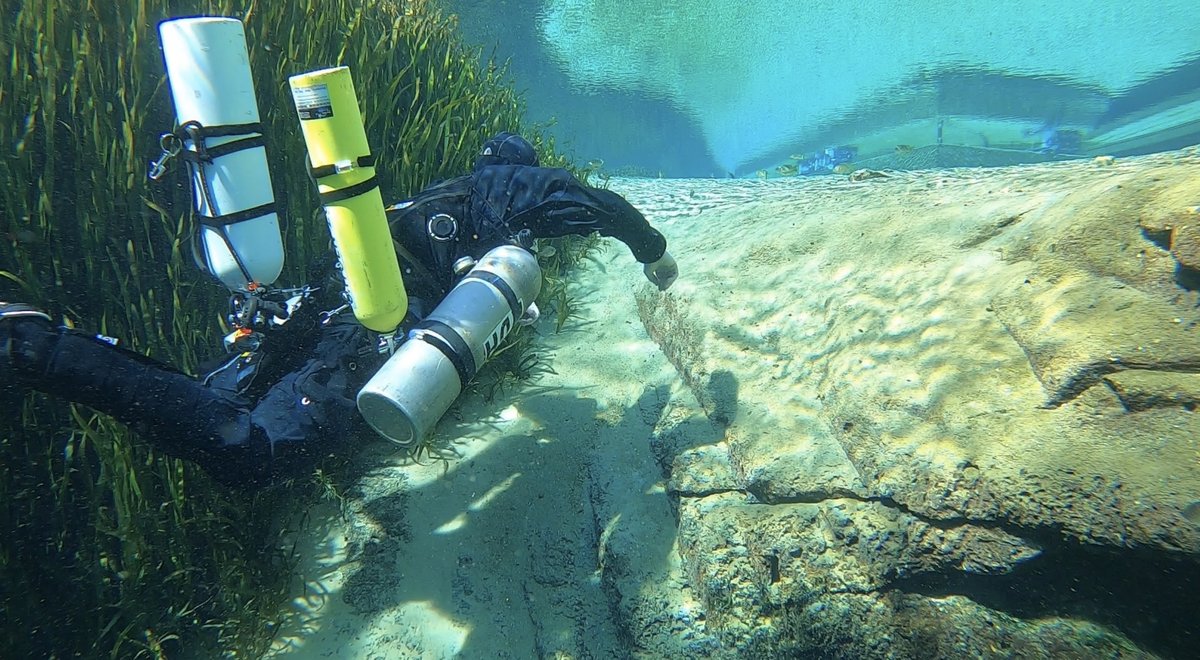
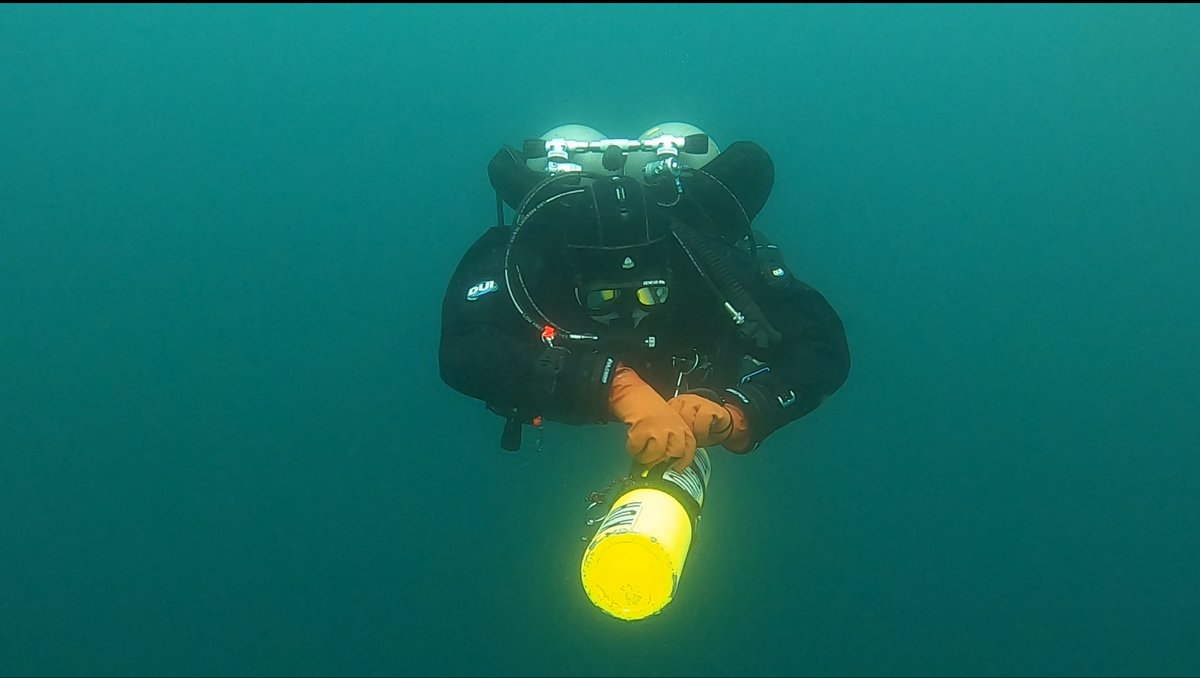
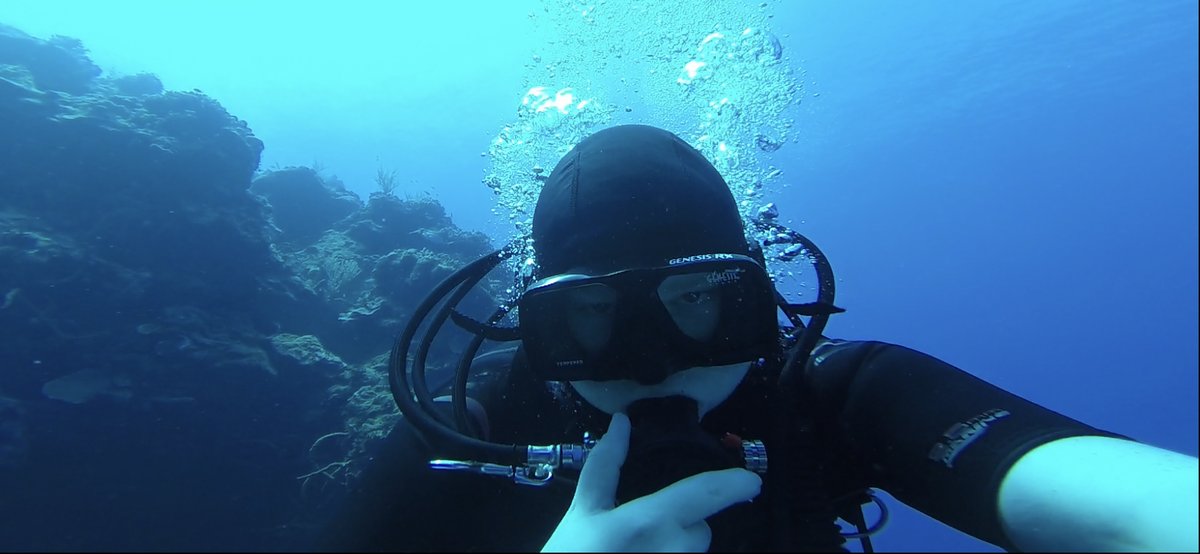
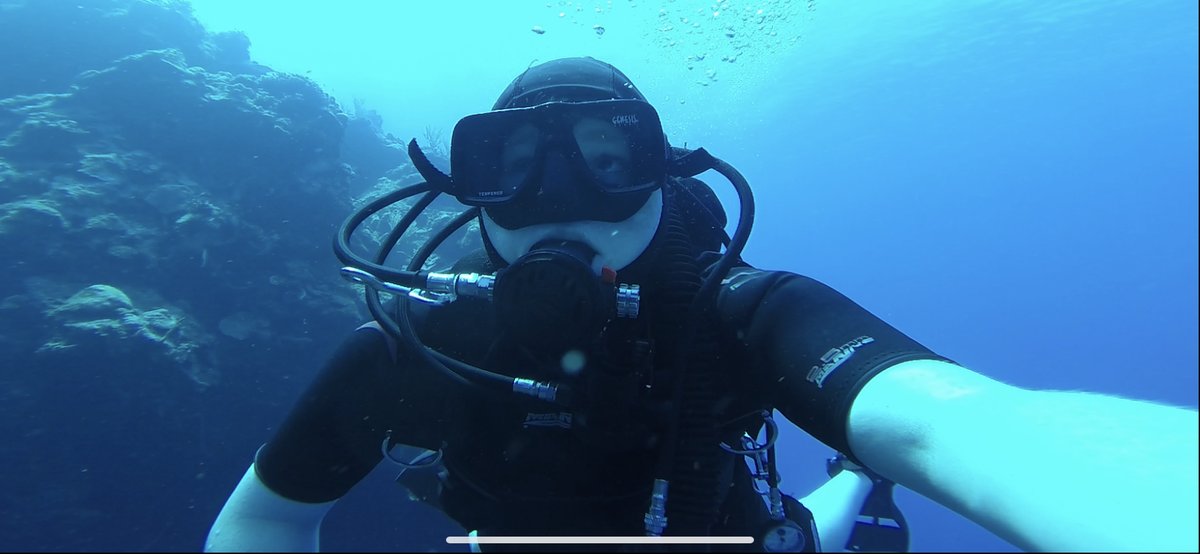
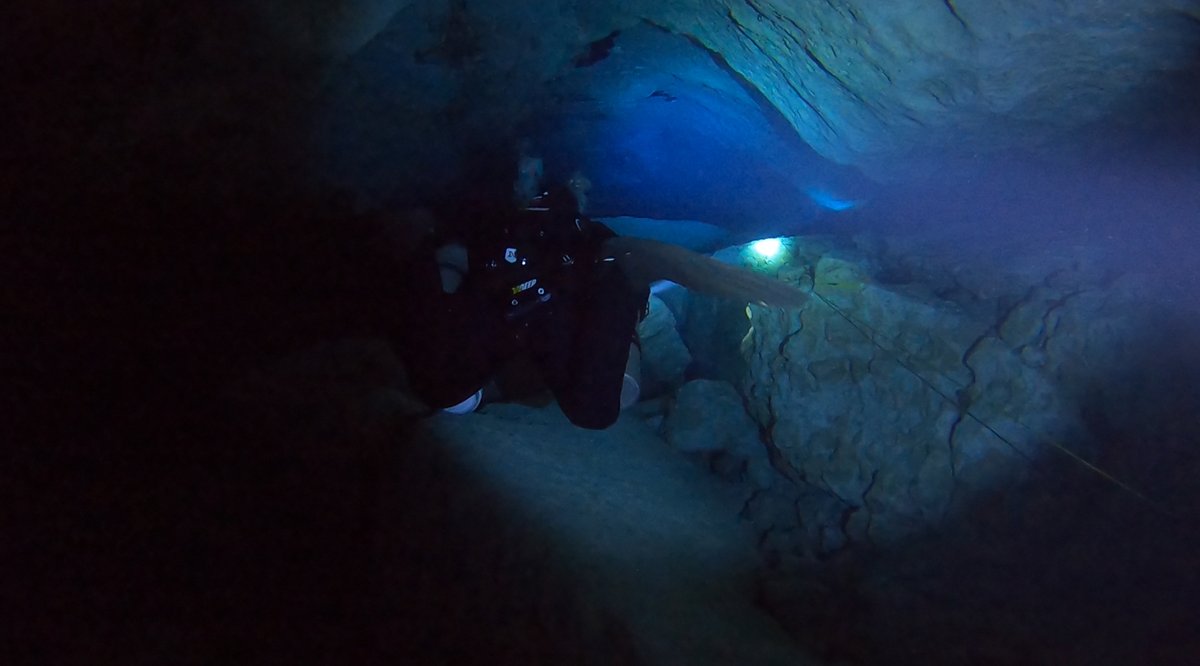
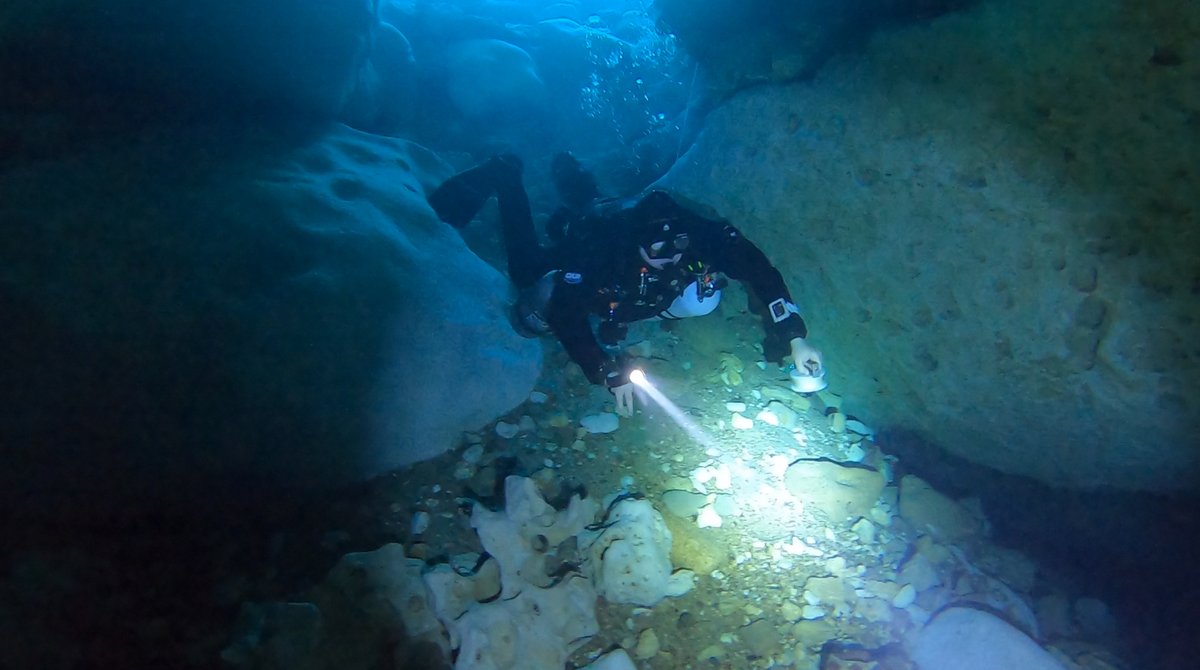
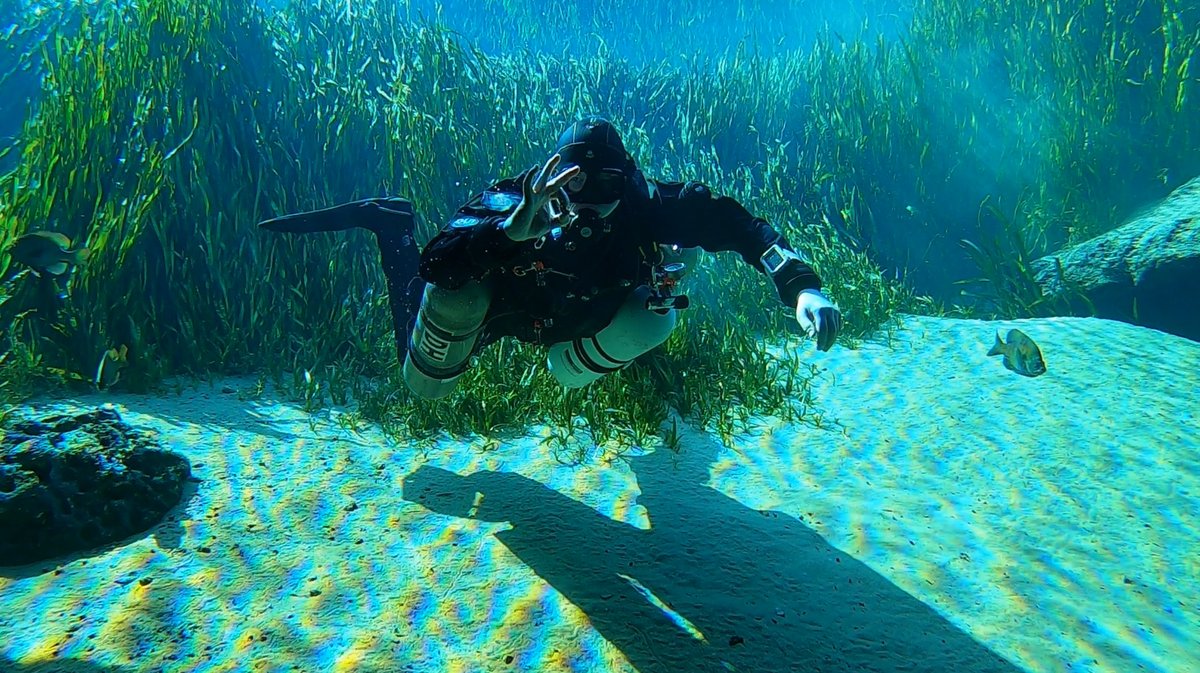
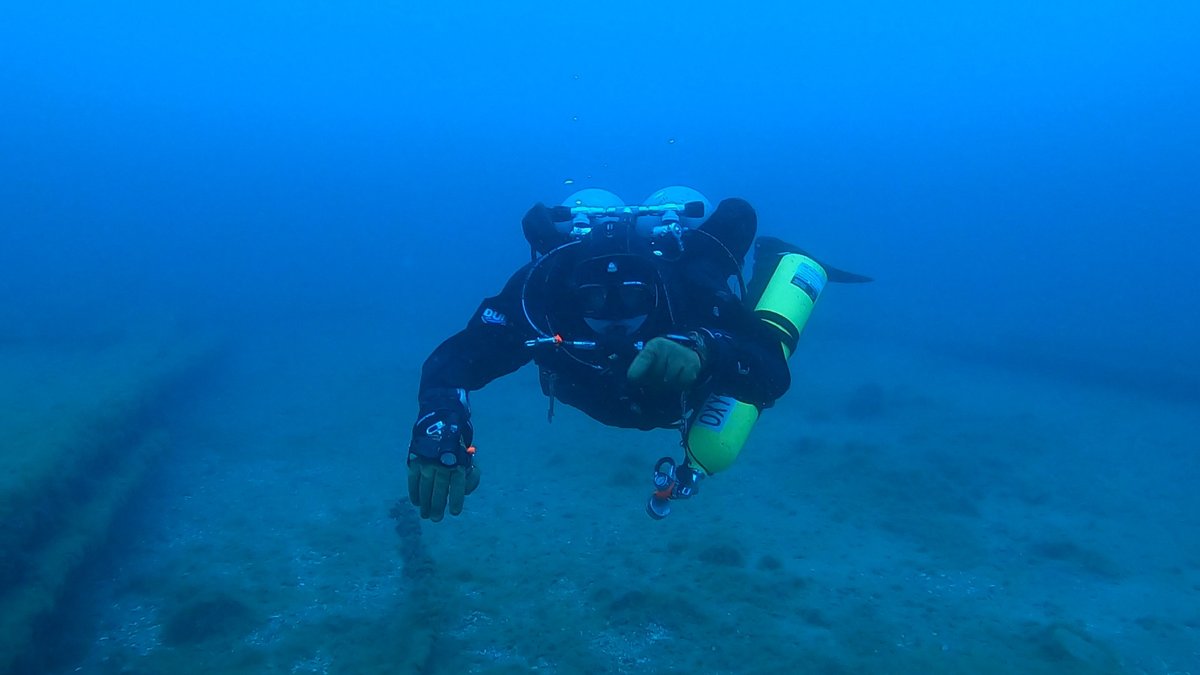
Kian has been diving since 2014 and has spent the years since pushing into more technical territory, earning cave and deep certifications in 2022 and 2023. That progression tracks closely with his engineering interests, technical diving rewards the same careful risk assessment, redundancy planning, and equipment discipline that shows up in his design work.
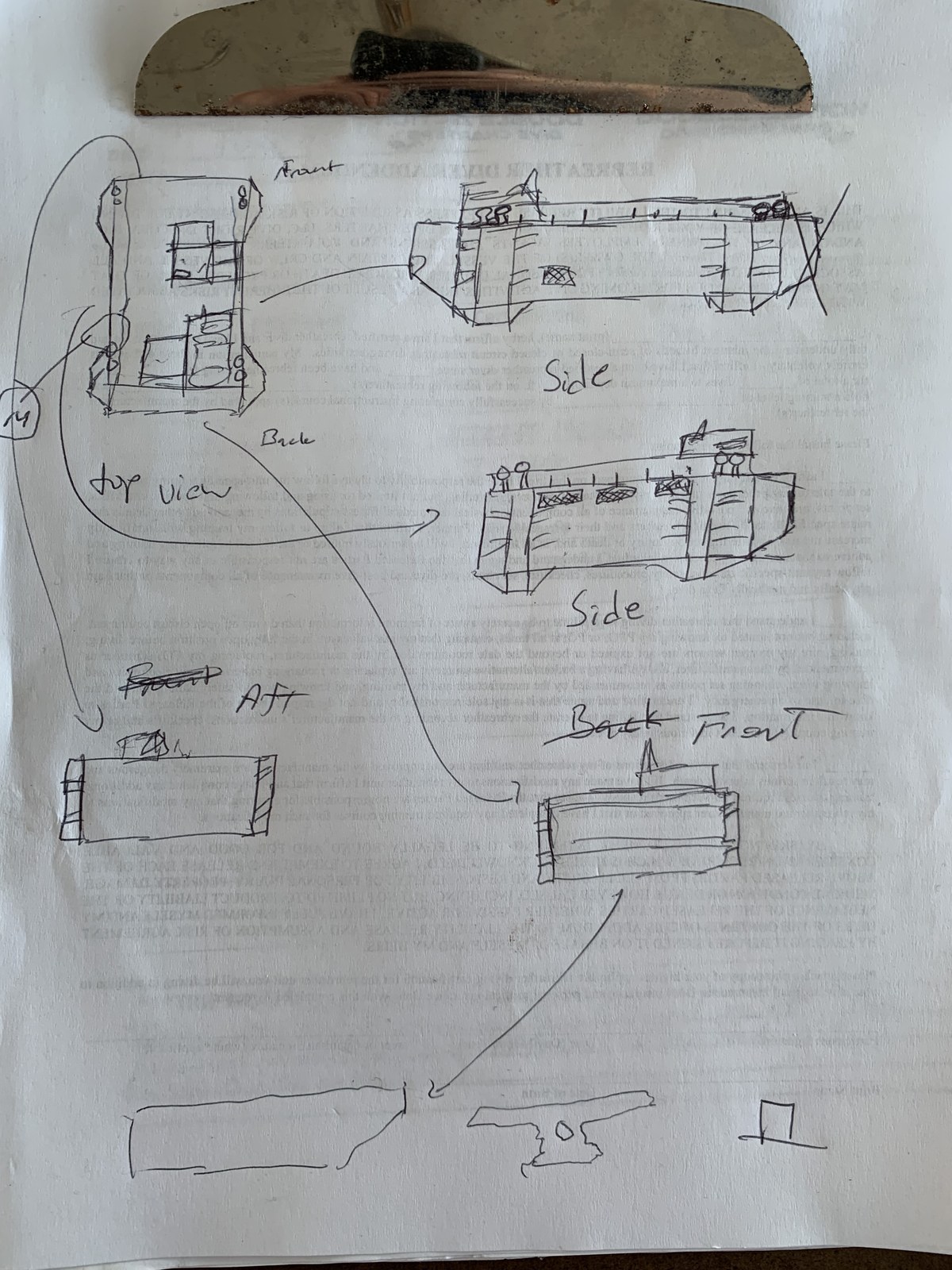
Front, side, and top views of Cody's Barge, sketched from the survey.
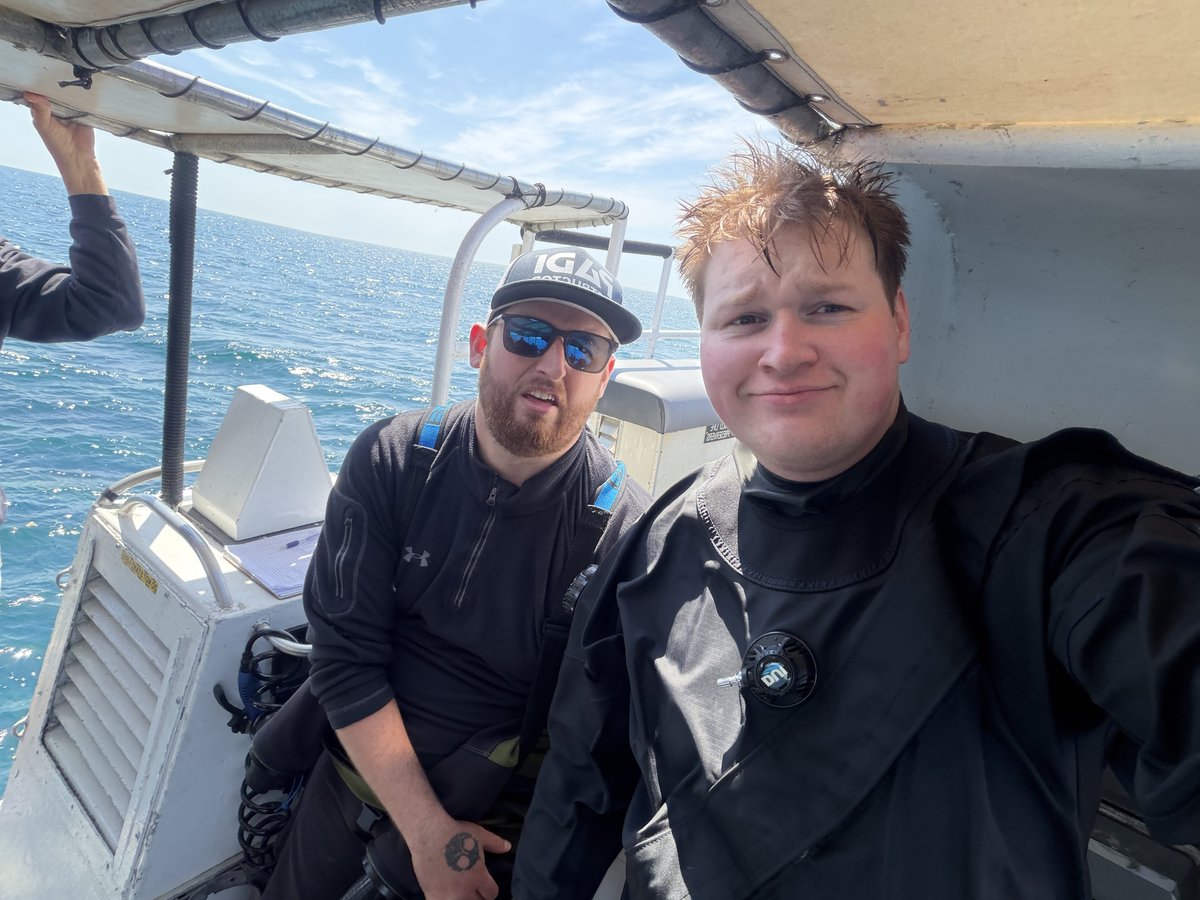
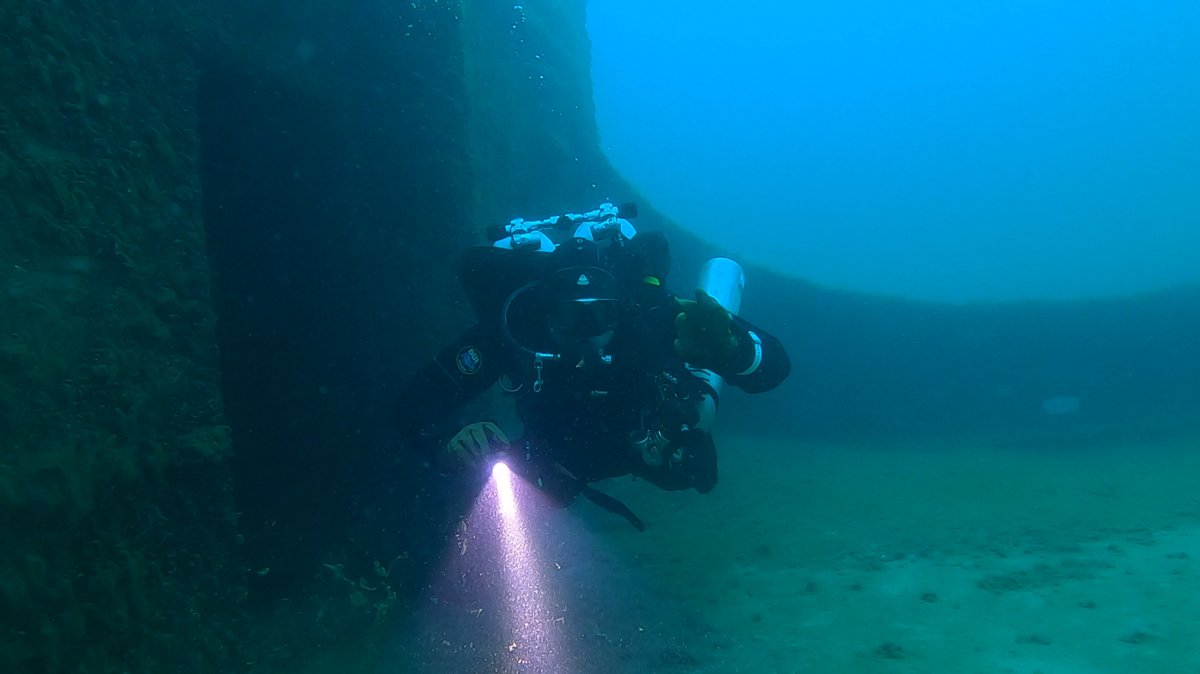
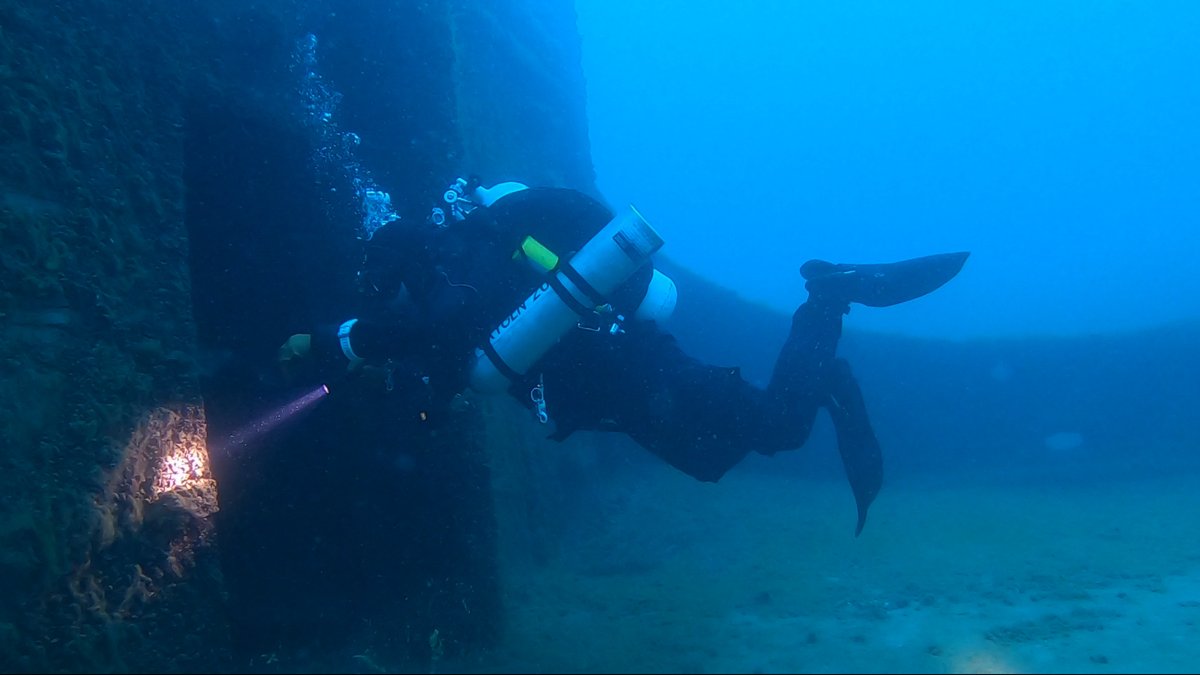
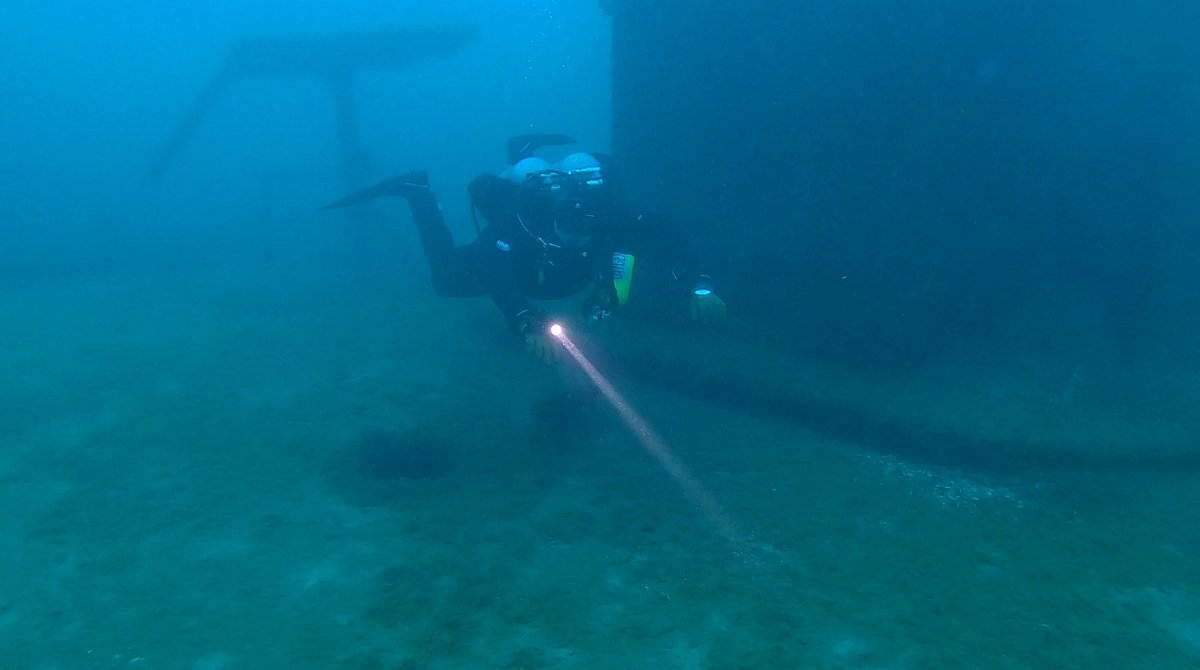
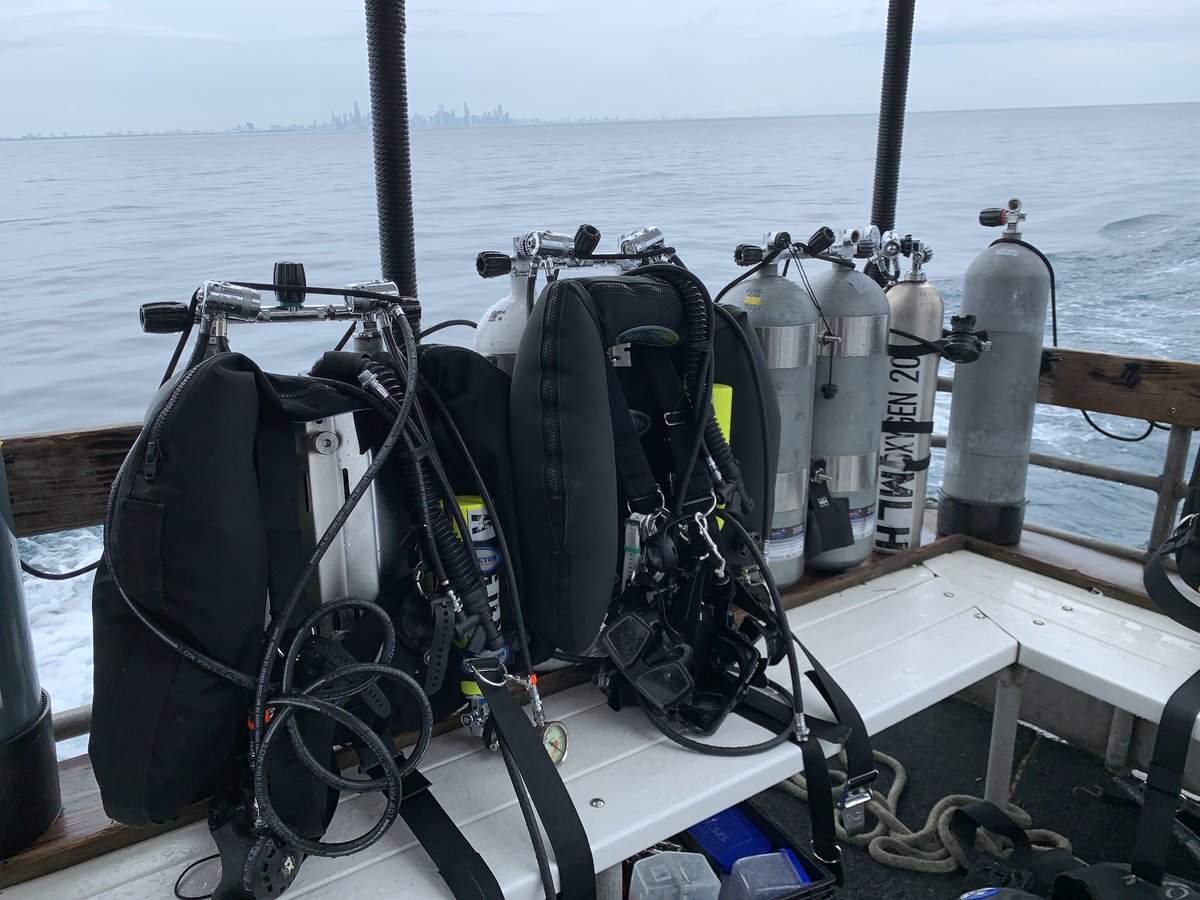
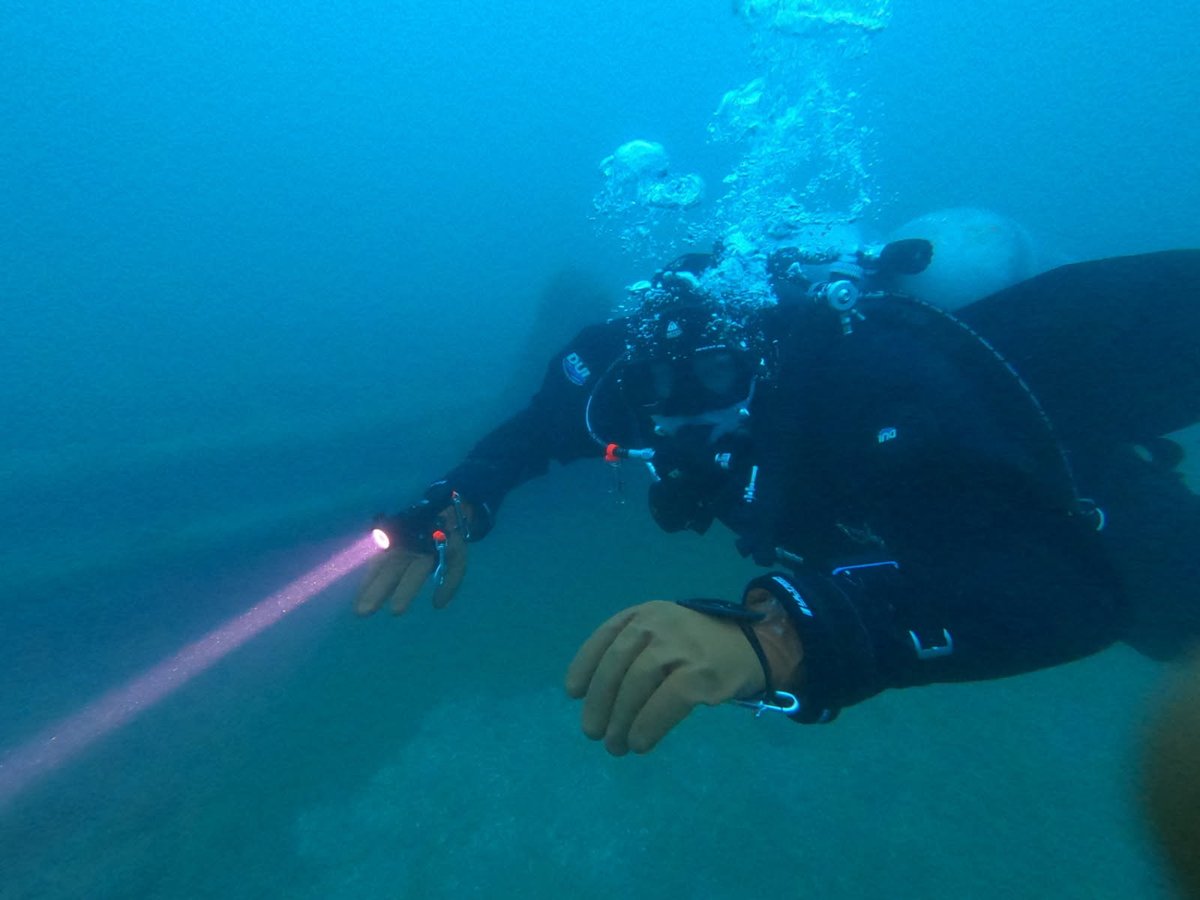
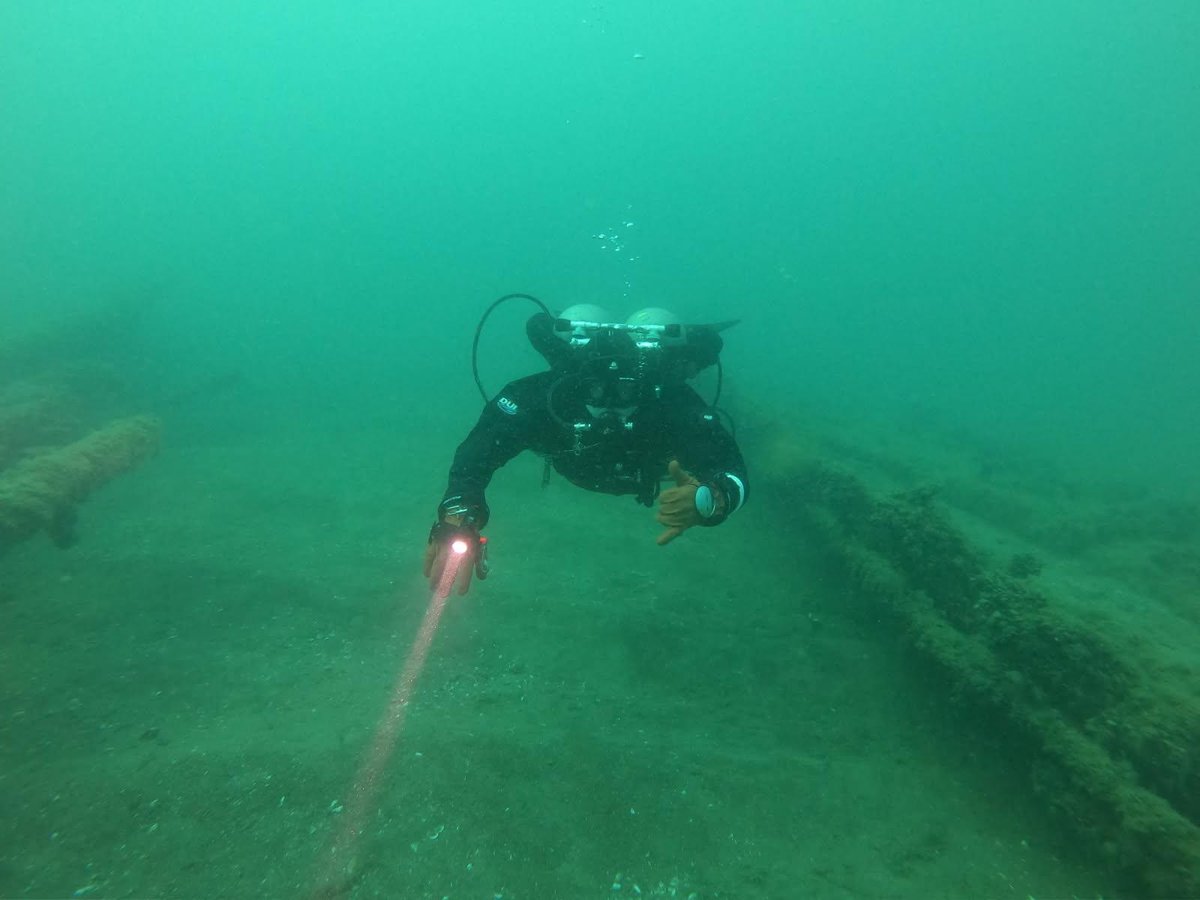
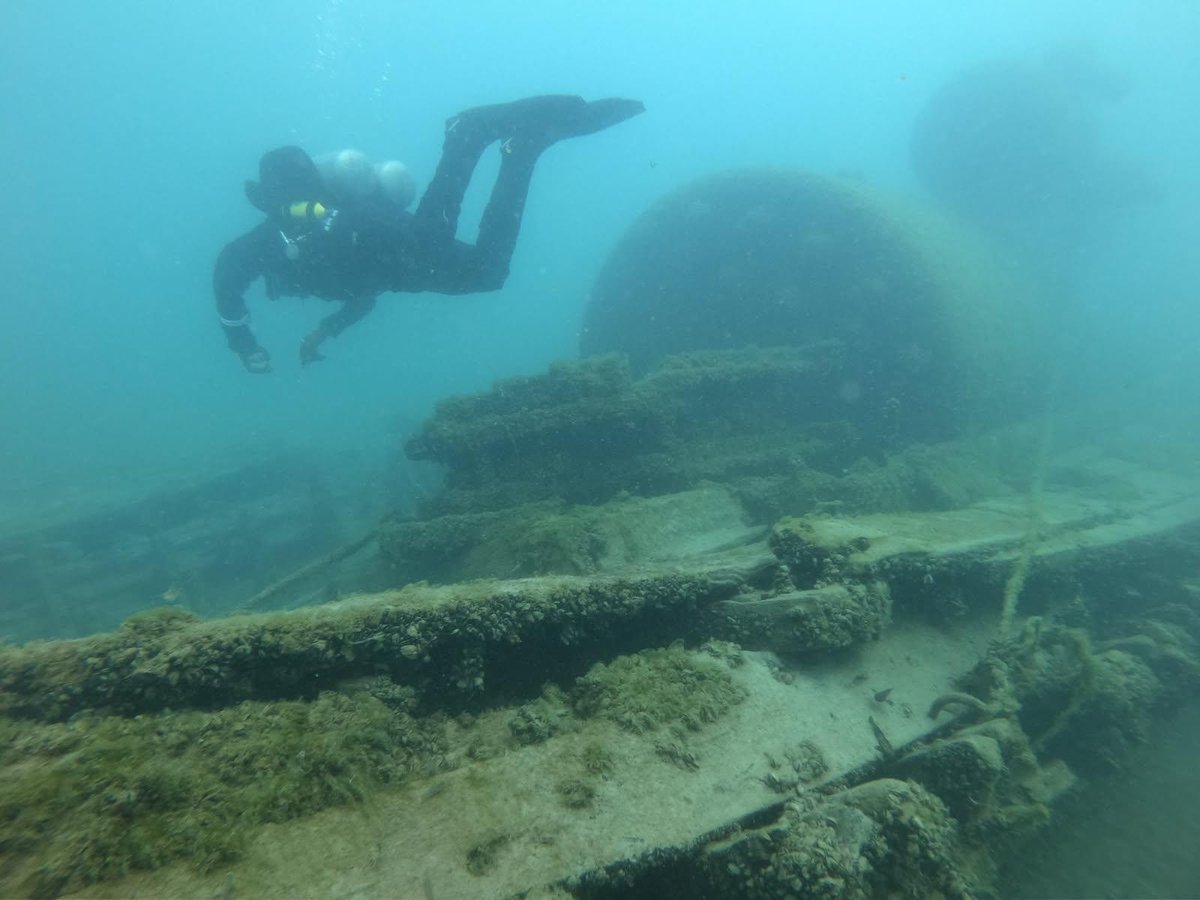
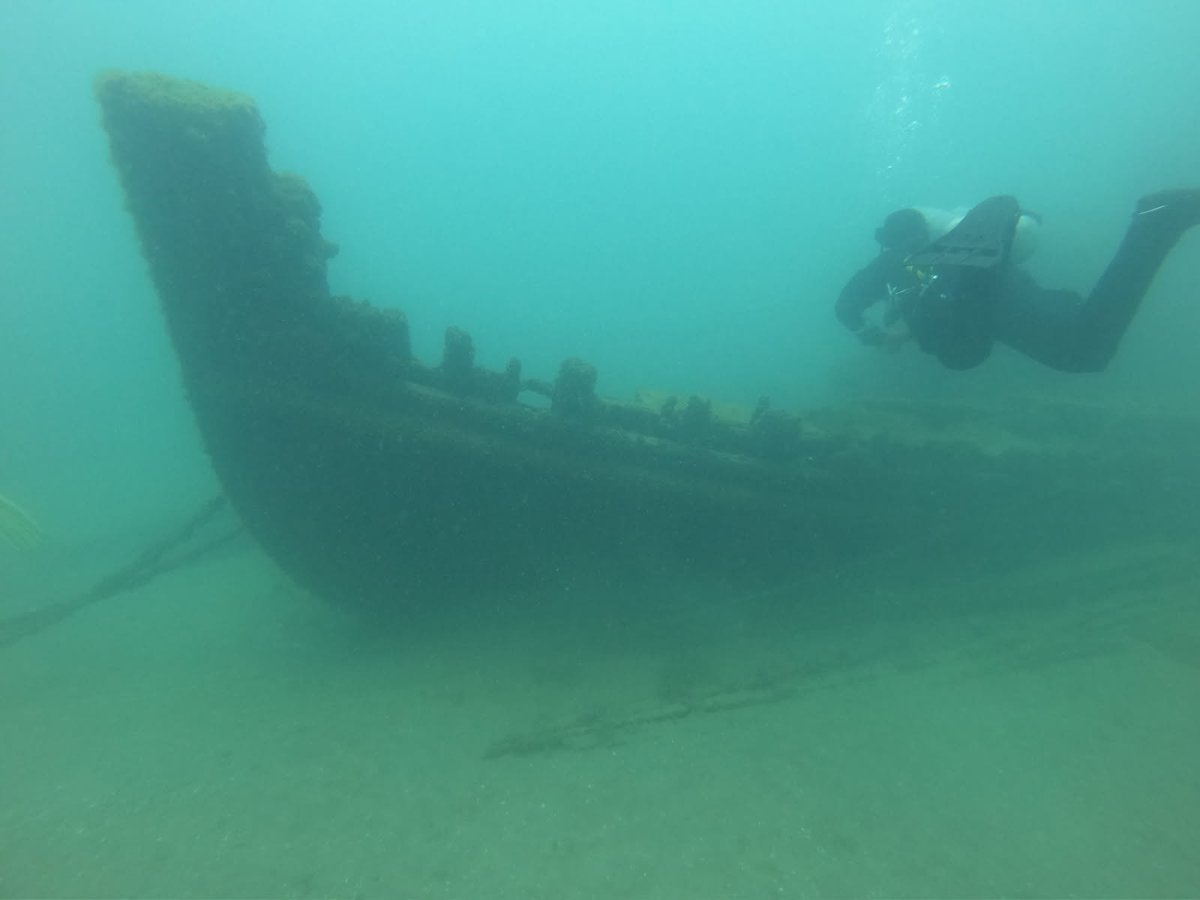
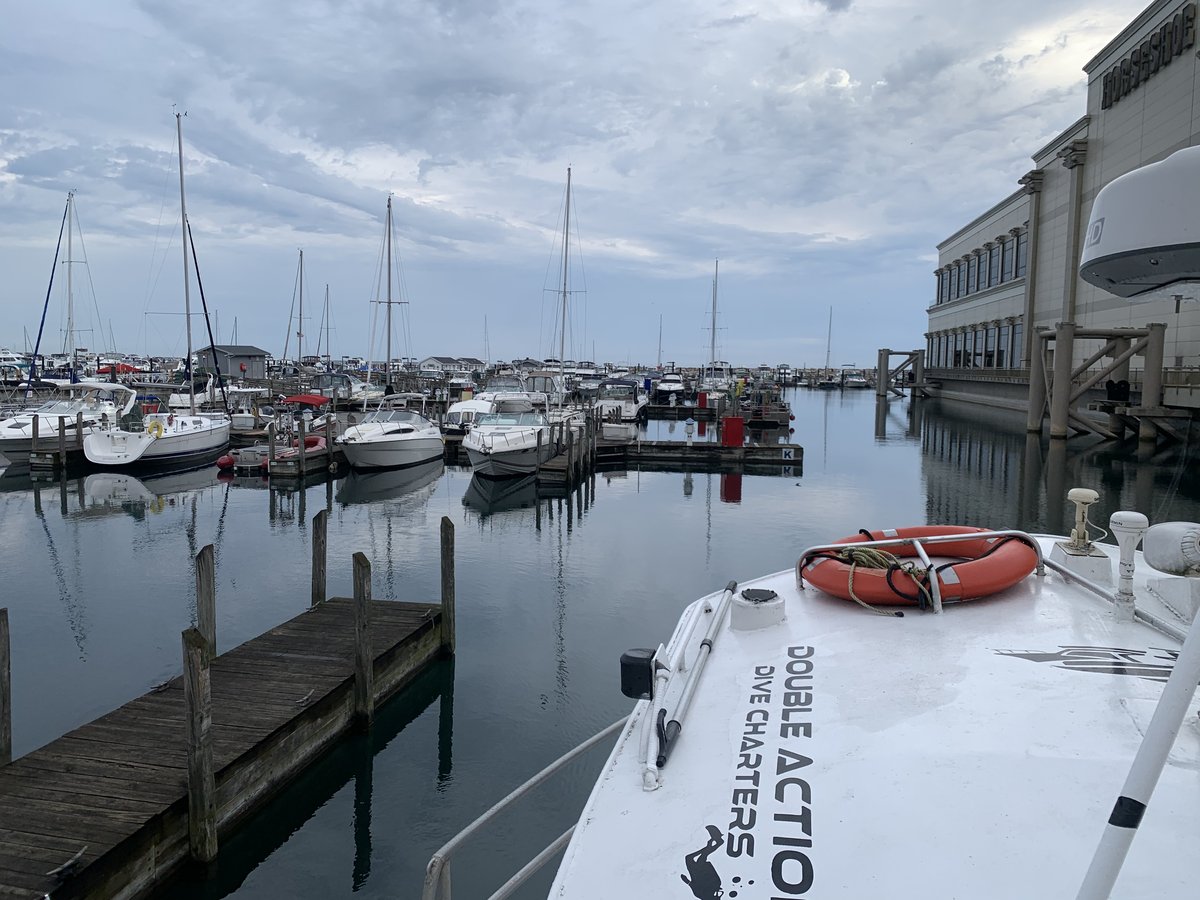
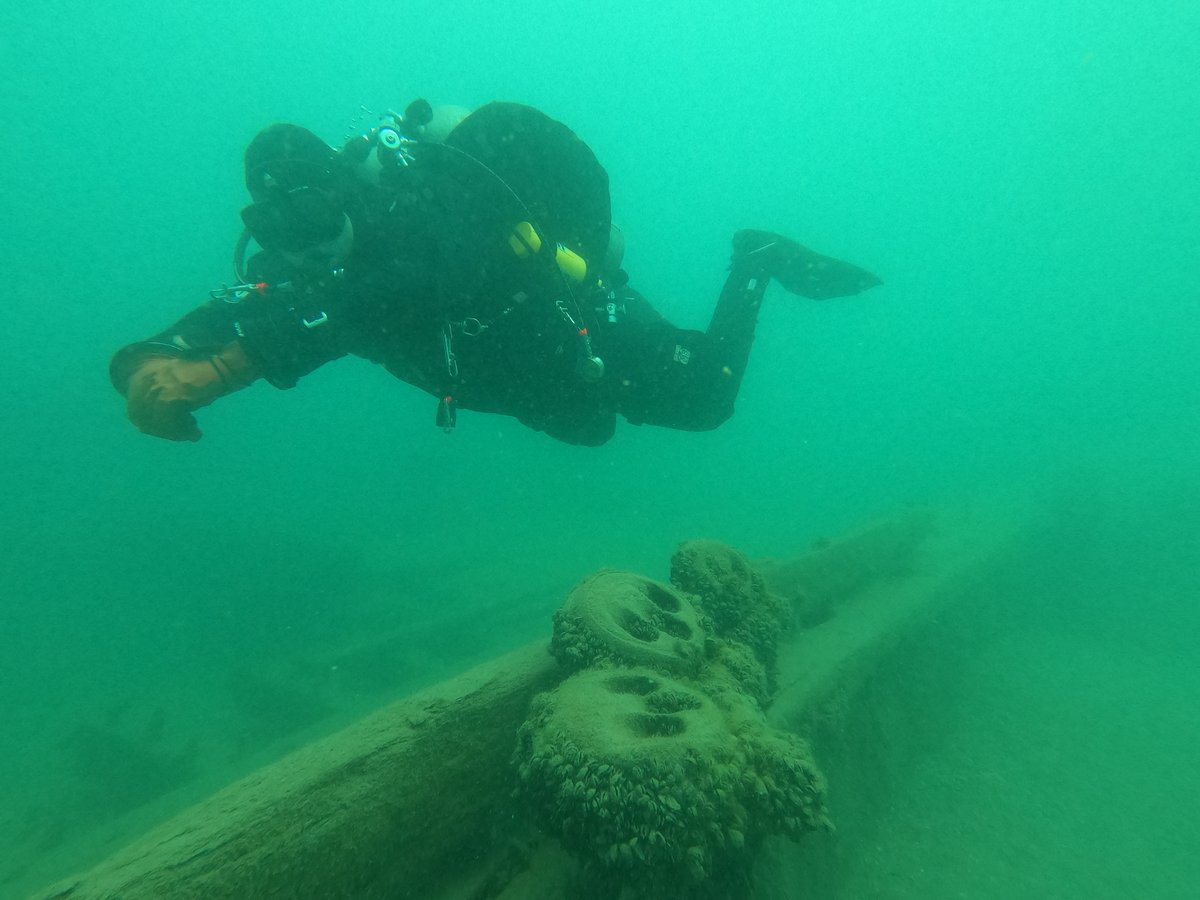
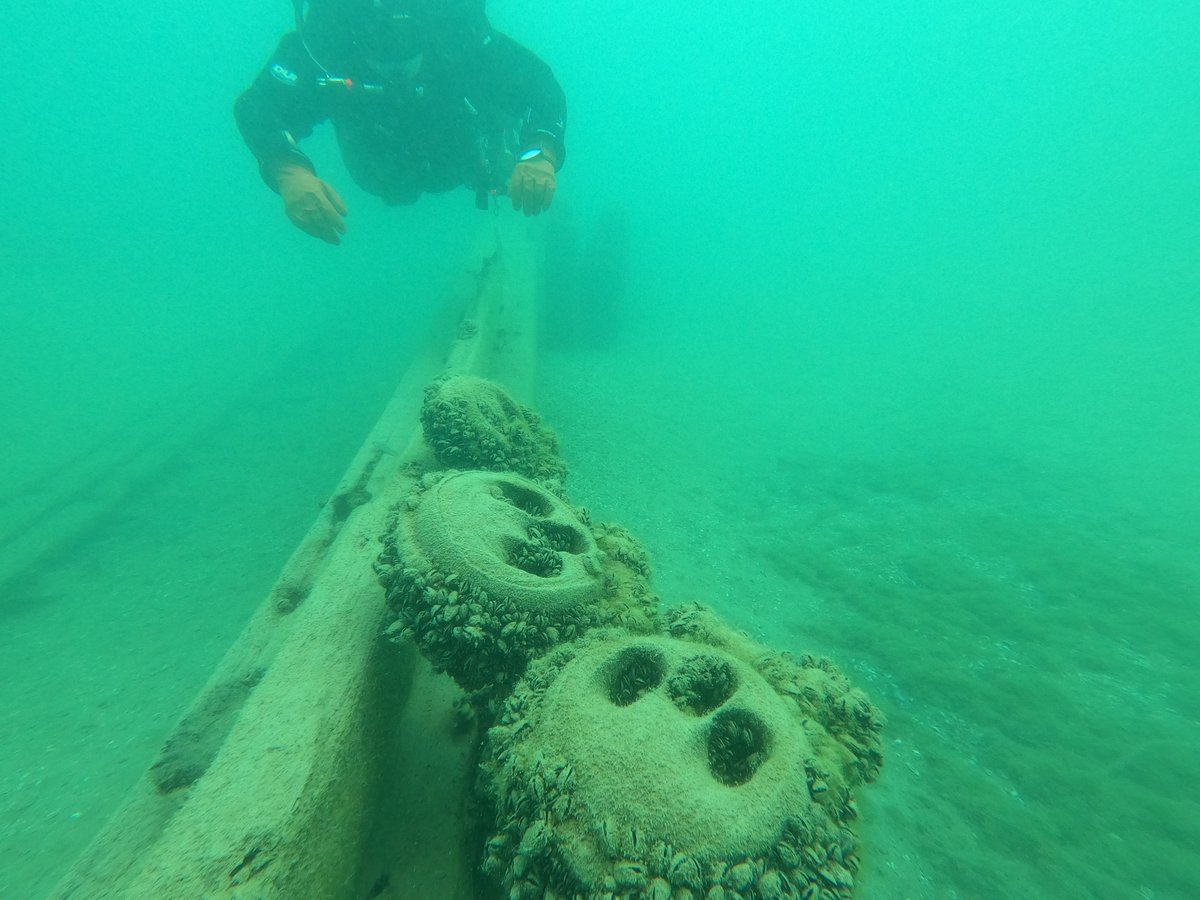
Two barges, one day, both surveyed. On August 16, 2026, Kian ran back-to-back staged-decompression dives on two unidentified Lake Michigan barges, descending first with a buddy to set the mooring, then completing each survey solo while the boat tied in.
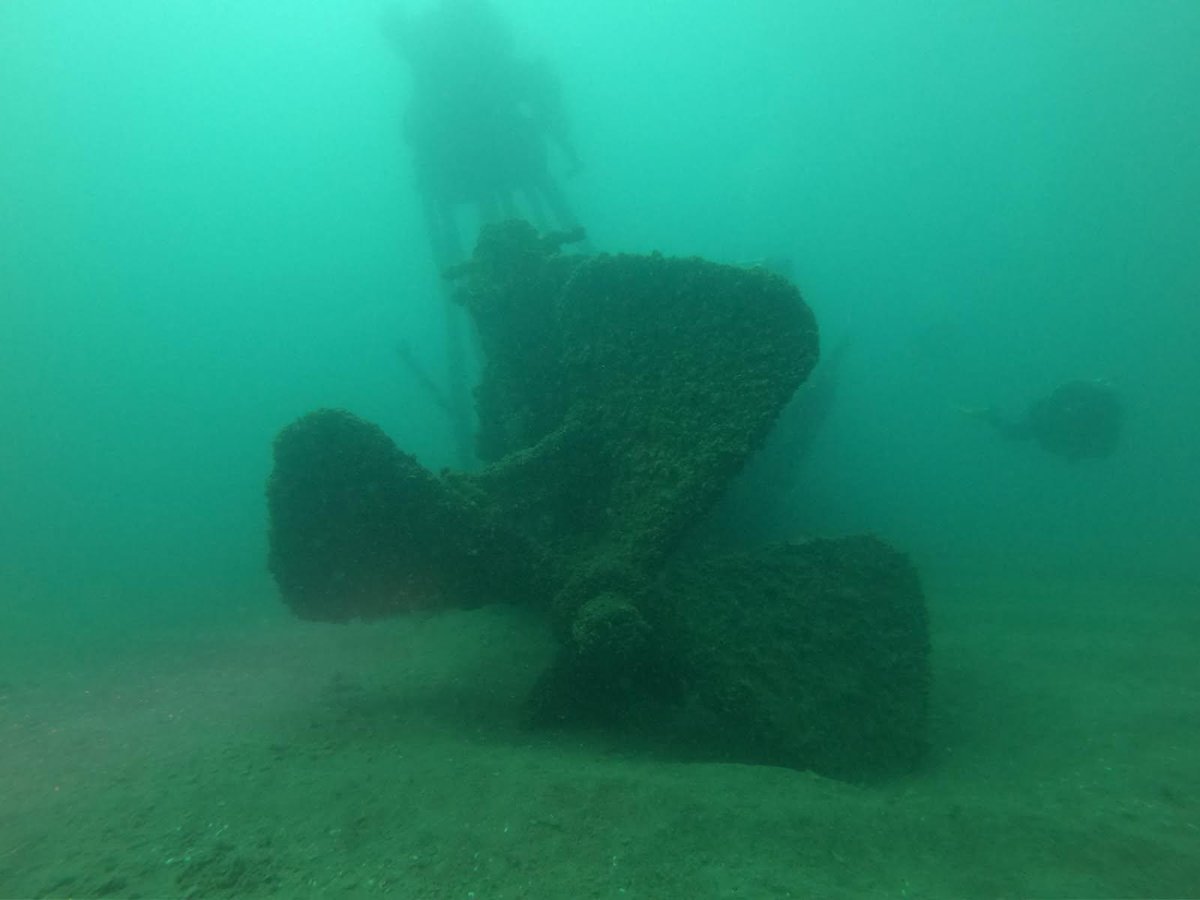
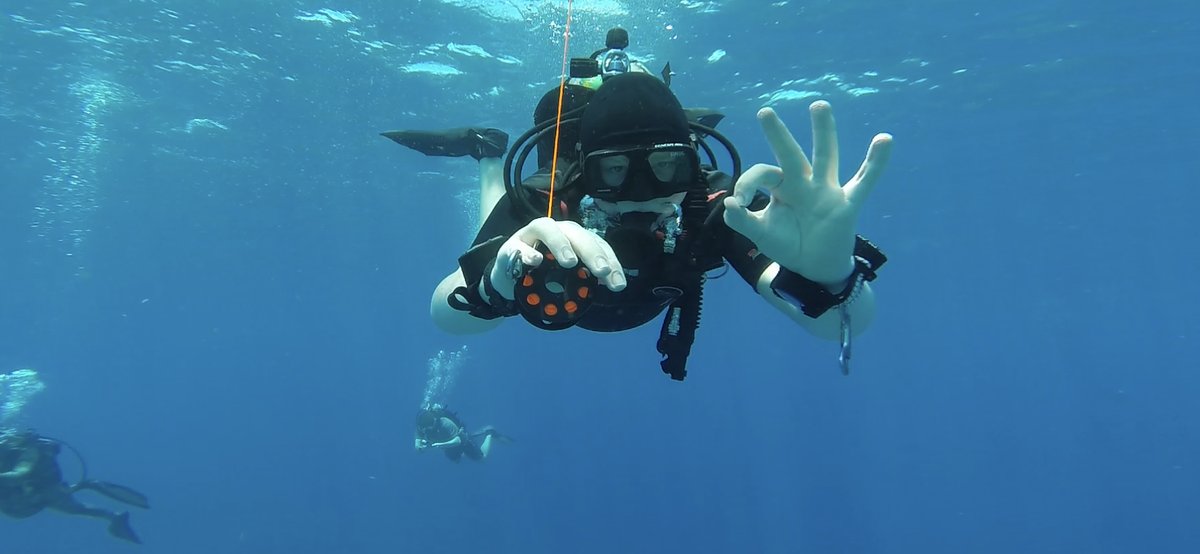
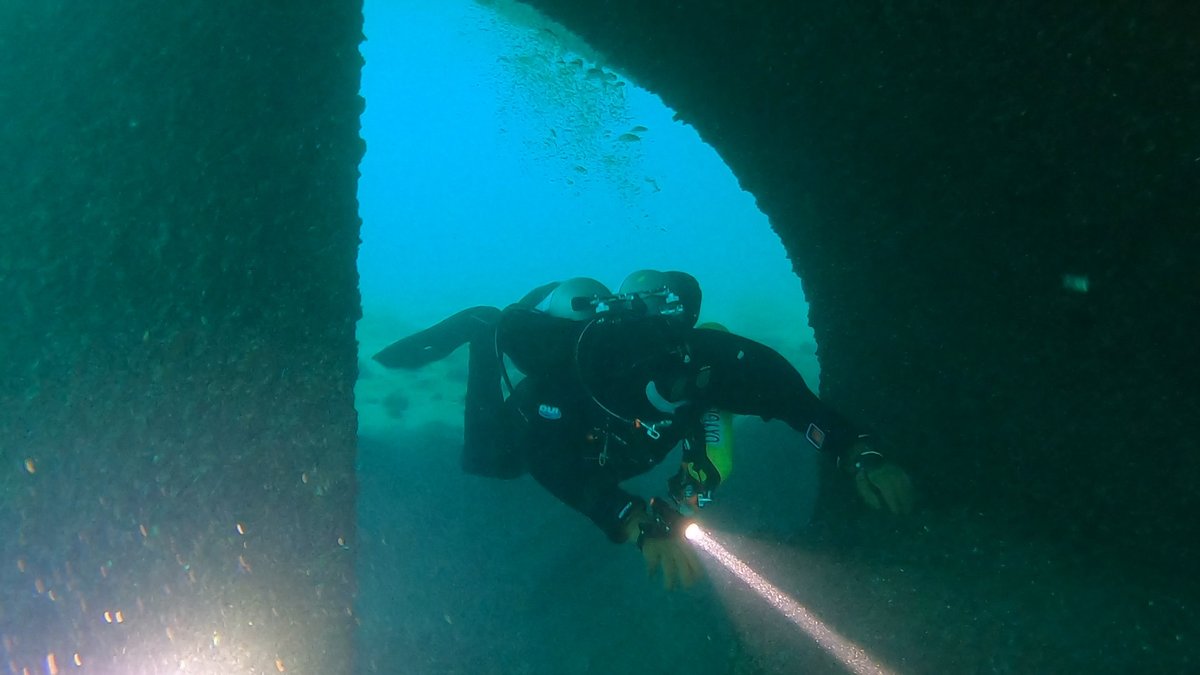
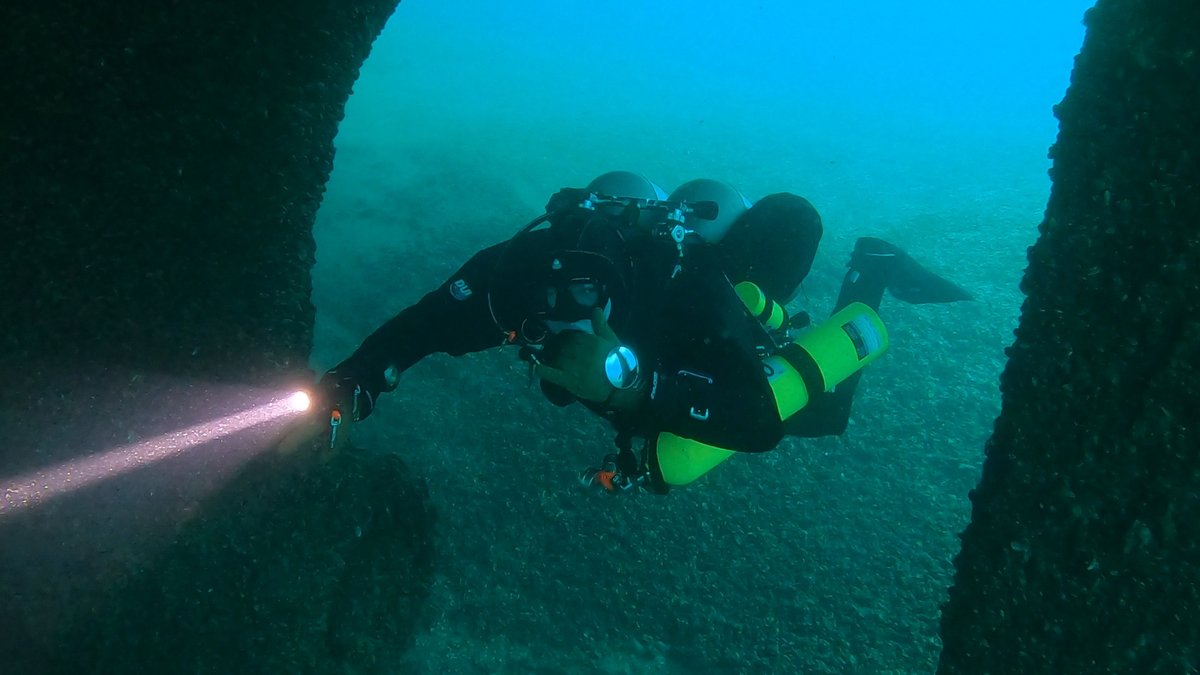
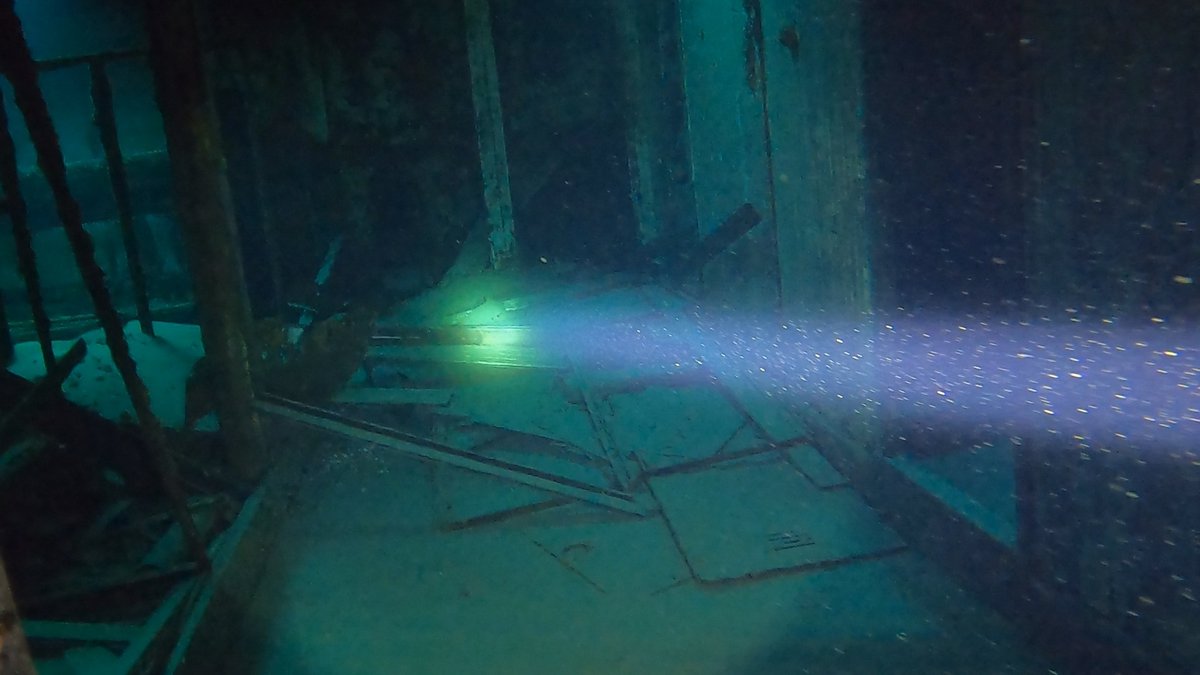
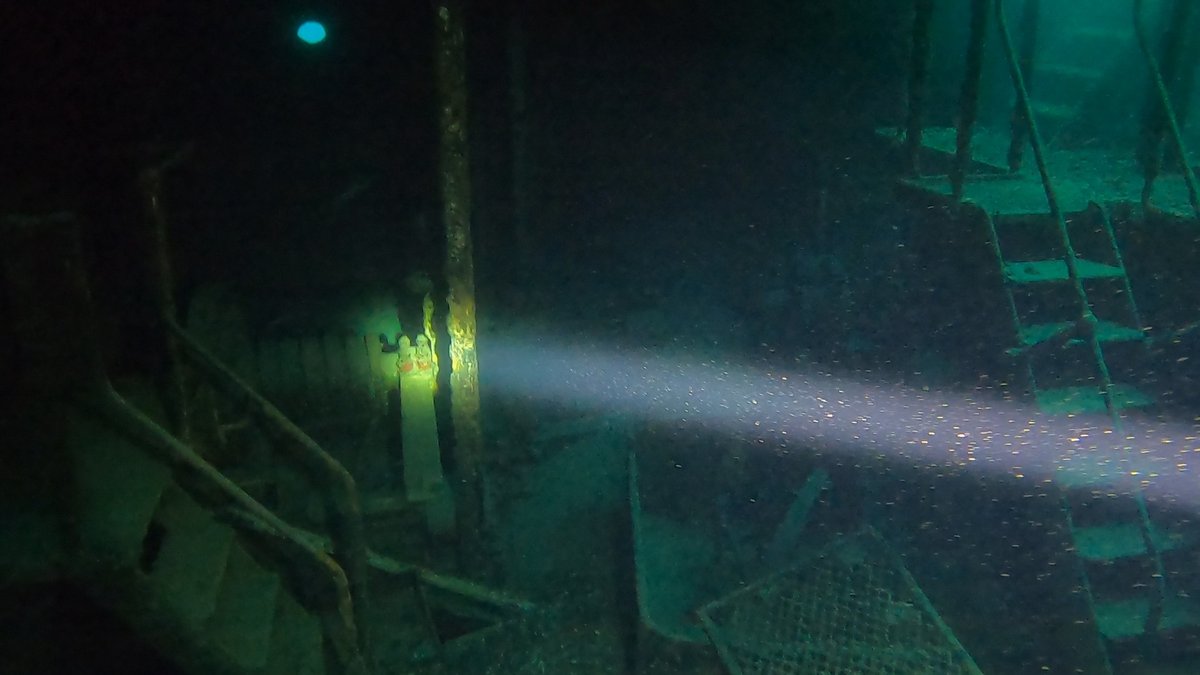
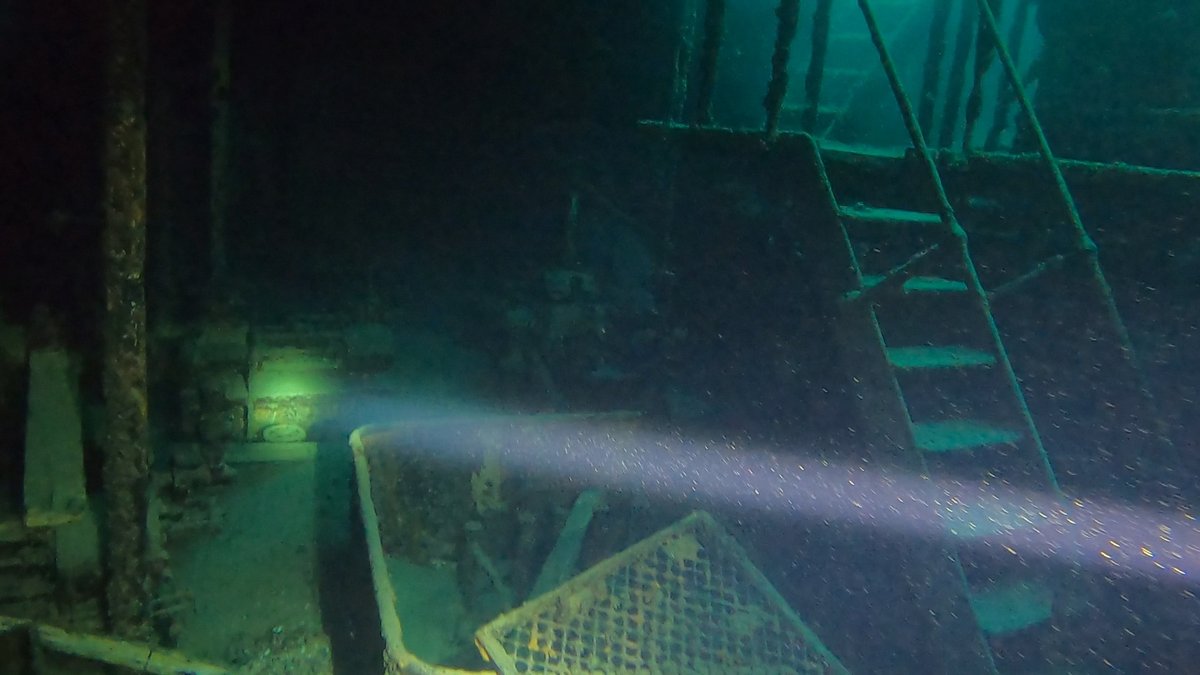
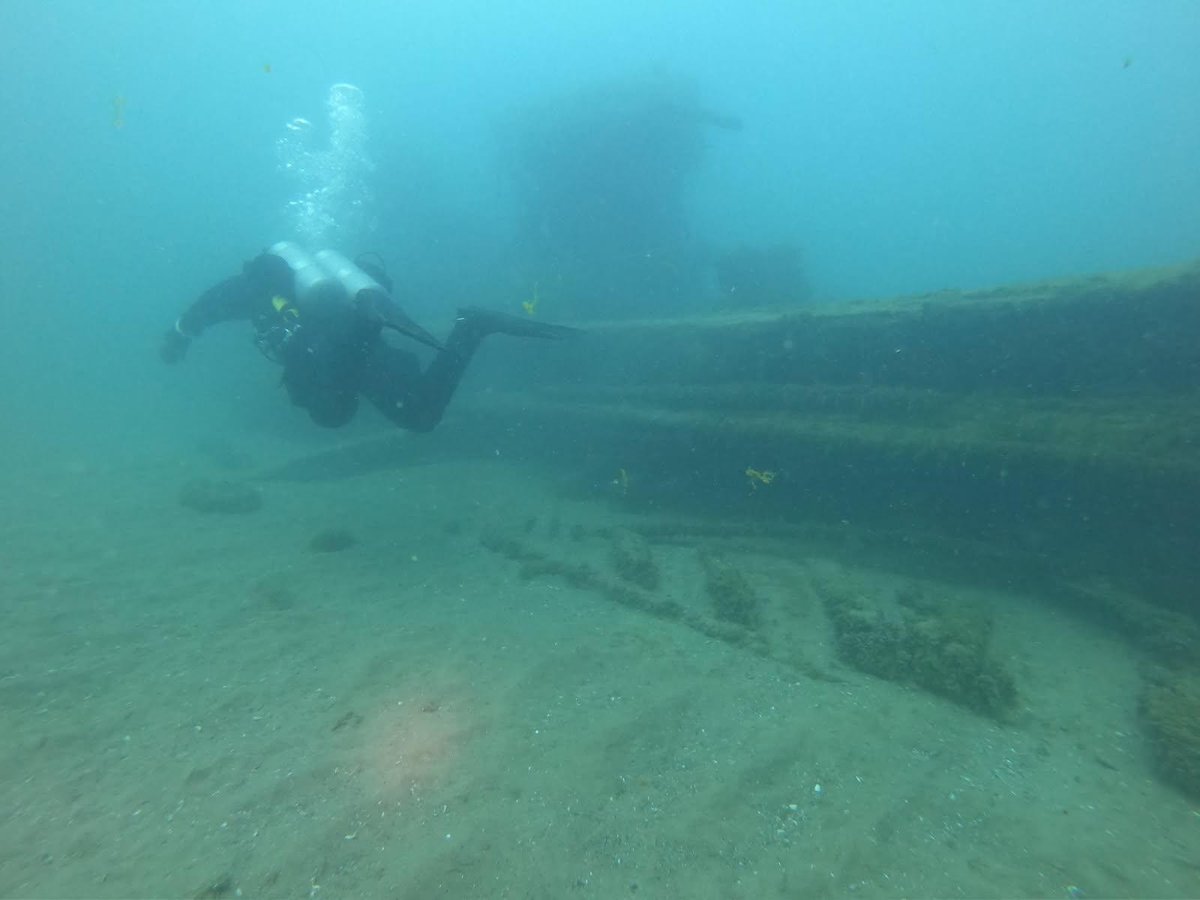
Keith's Barge was the prize. Sitting upside down in 115 ft of water with its hull topping out at 95 ft, the wreck had been seen by only one person before. Working with a knotted spool marked every five feet, Kian measured it at 130 × 35 × 20 ft and documented multiple sets of thick wooden double doors, each roughly 8 × 15 ft, running the length of the hull and hinged to swing upward. Because the barge is inverted, its open bottom now faces the lake bed, and the compartments, though choked with silt, can be swum through and exited to open water on the far side. Kian is the first to see the wreck in its entirety, sketch it, measure it, and penetrate it.
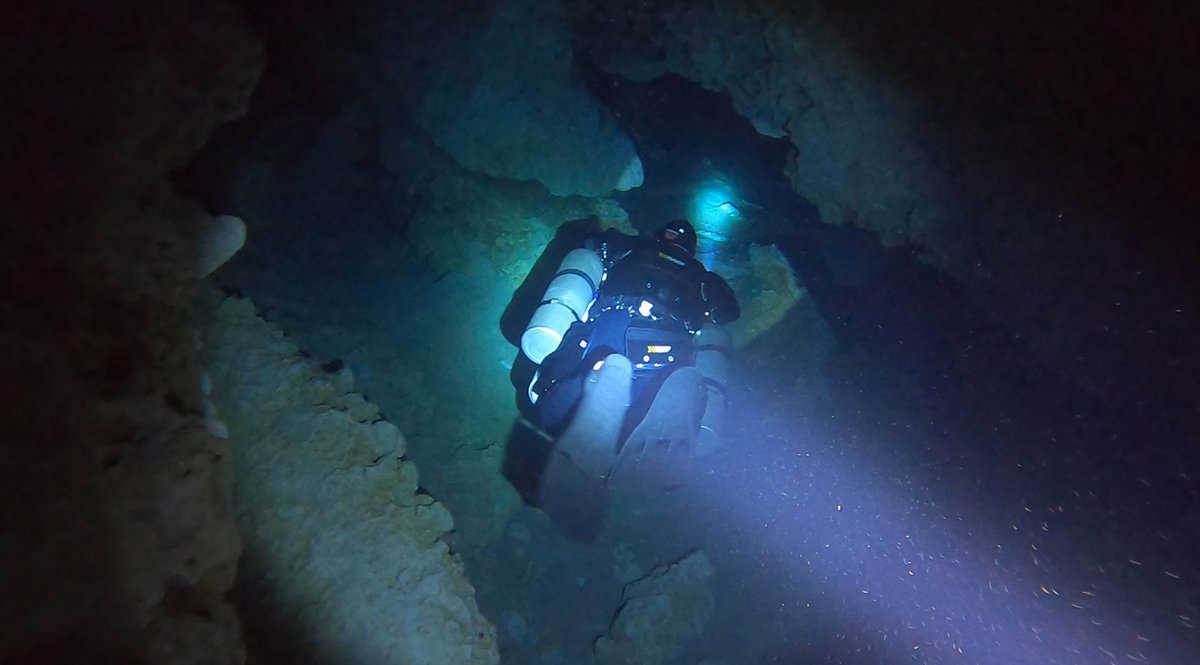
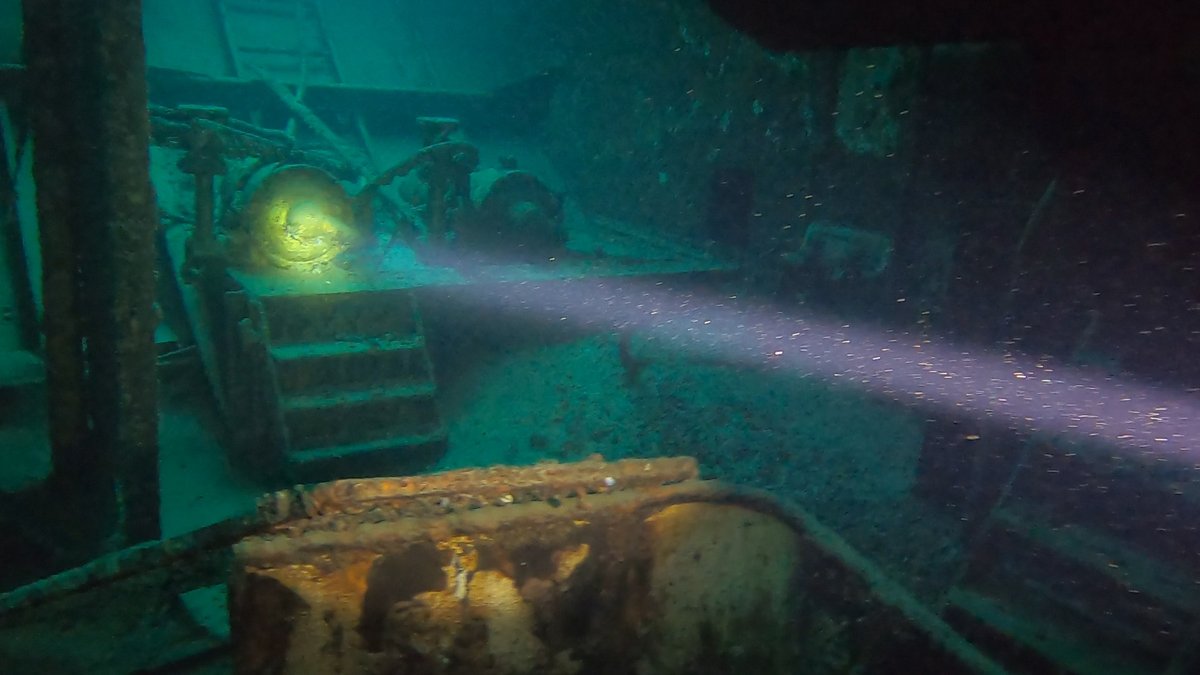
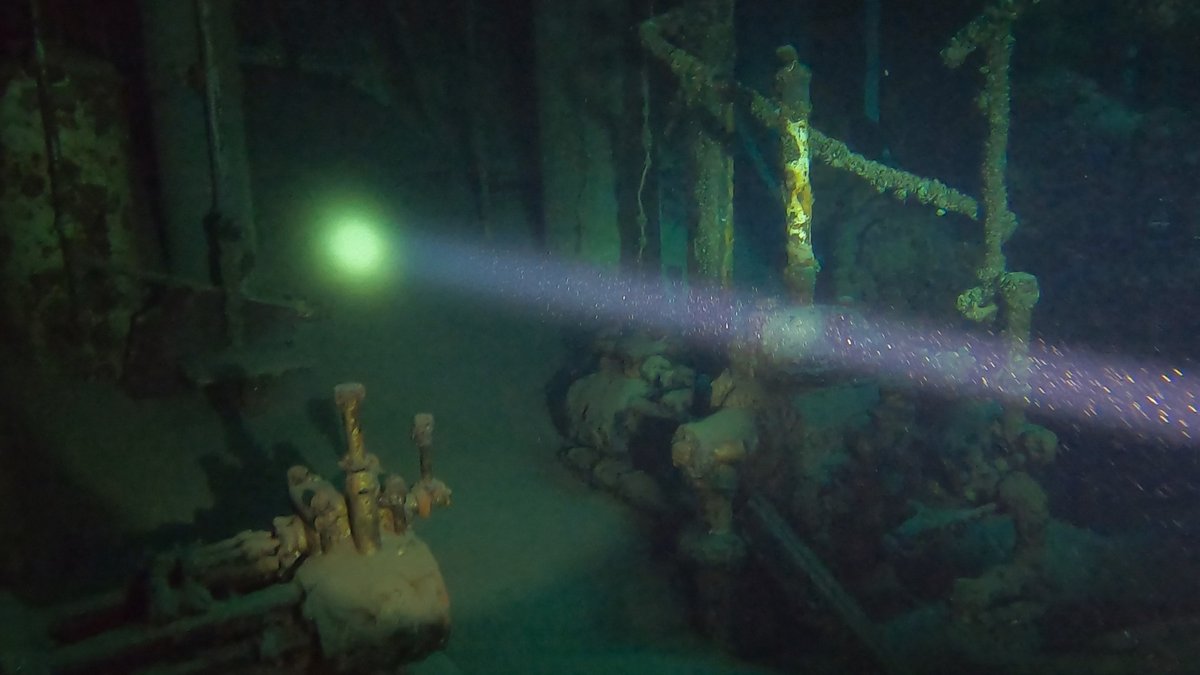
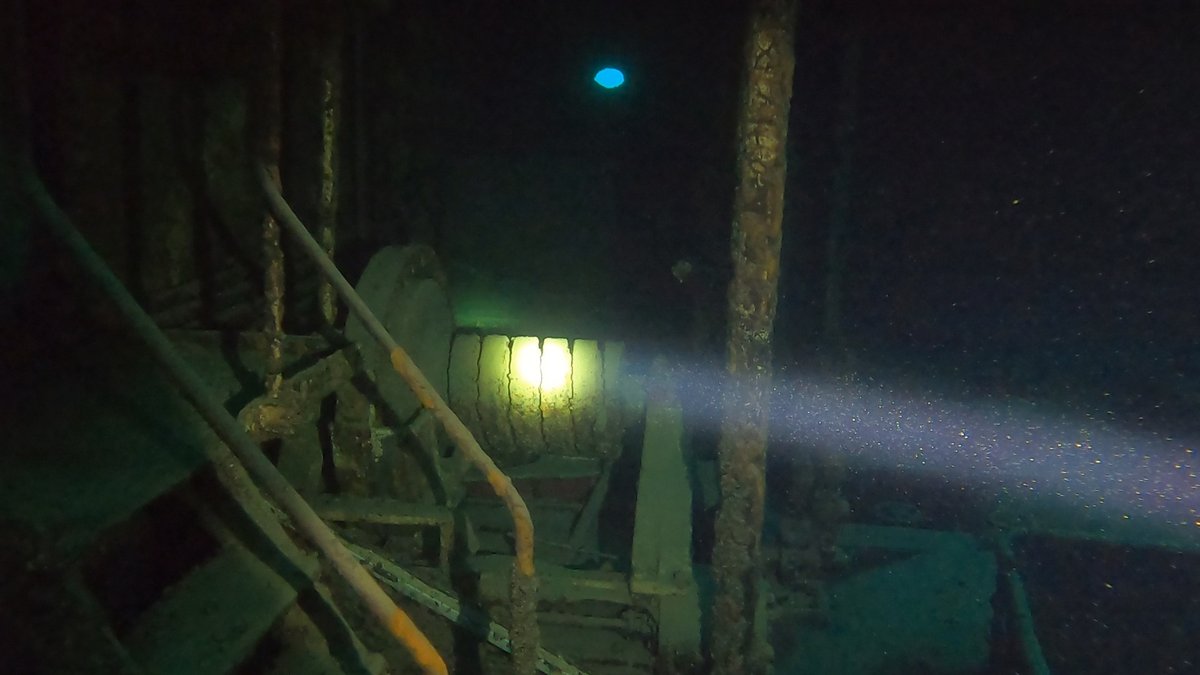
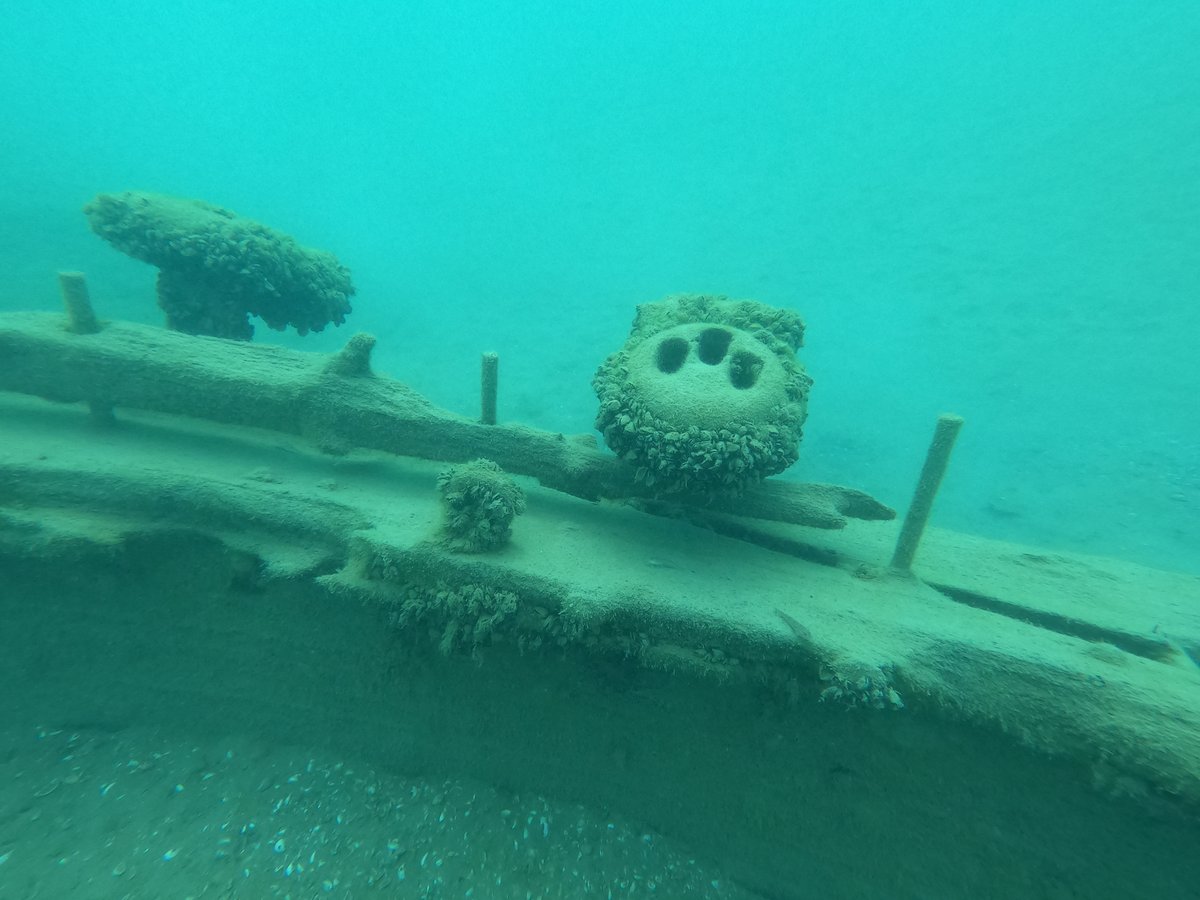
Cody's Barge, surveyed on the second dive of the day, came in slightly smaller at 115 × 25 × 20 ft. Kian dropped in at the midship ladder and penetrated bow to stern, finding a large open interior braced with cross beams and columns, oversized drum barrels, a captain's helm, and a circular cutout on the flat top that likely once mounted a small arm crane.
Neither wreck carries a plaque, papers, helmets, or any other identifying mark, all of it apparently stripped before they went down. Kian's working theory: this stretch of lakebed was a dumping ground, where companies scuttled barges rather than pay to have them properly broken up.
Do the measurements match the record?
Both wrecks fit the profile of a wooden covered deck scow, the workhorse barge of the Great Lakes from the late 1800s through the mid-1900s. The type is defined by a flat bottom, vertical sides, and square ends, with the hull braced internally by bulkheads, pillars, and cross trusses, exactly the cross beams and columns Kian found inside Cody's Barge. Recorded coal scows of the era ran 160–175 ft long by 24 ft wide, putting both of these at the smaller end of a well-documented size range. Wooden construction dominated the class until the last wooden scows were built in the 1950s, which brackets these two hulls to roughly a 1890–1950 build window.
The repeating sets of heavy timber double doors are consistent with a covered scow, the variant built with hinged hatches over the cargo hold to protect weather-sensitive freight like grain or finished goods, as opposed to the open-deck scows used for stone and brick. The circular crane mount and captain's helm on Cody's Barge point to a working vessel rather than a simple towed hopper.
The scuttling theory also has precedent. Deliberately sinking a barge at the end of its service life was common practice on the Great Lakes; the wooden barge EMBA was intentionally scuttled off Milwaukee in 1932 after 42 years of work. Stripped identification, though, is the detail that stands out, and it is what keeps both of these hulls unnamed.
Eleven years of logbook entries, plotted out.
Every dive below comes straight out of the Subsurface export, depths, durations, and sites, no rounding beyond what the dive computer already did.
Dives per year
Certifications
How a quarry checkout dive turned into wreck penetration on trimix.