senior capstone

Cyclodapt: adaptable cycling for an upper limb difference

A knee-actuated braking system and custom cuff that let a rider with symbrachydactyly cycle independently, without a prosthetic.

Identifying the problem

There is a need for a system which empowers individuals with an upper limb difference to safely and comfortably operate a bicycle.

People with an upper limb difference face real, everyday barriers to cycling. Riding safely requires two functional hands for steering, braking, and balance, and the adaptive equipment that already exists is either too expensive, dependent on an existing prosthetic, or requires a second rider — so anyone who wants to ride independently, on their own bike, without a prosthetic, is left without a real option. Our mentor Laura, who has a right upper limb affected by symbrachydactyly, wanted a portable device she could bring to any bike rather than a specialized bicycle.

prevalence, US wrist amputees

42,500+

upper limb differences / 10k births

27.2

Existing solutions & market research

Every option we researched required an existing prosthetic, a second rider, or addressed only one part of the problem — never a full, independent, no-prosthetic solution.

Mert Lawwill Device — prosthetic ball/socket adapter~$2,000
Criterium+ device — prosthetic c-cup adapter~$1,000
OutBraker brake splitter~$250
MonoMano adaptable tricycle~$2,000
VanRaam adaptive bicycles$8,000–12,000
Myoelectric bionic limb$6,000–80,000

Functional requirements

Requirements centered on safety and accessibility, translated into measurable pass/fail criteria for every test we ran.

Stop within 5m at 16 km/h
Disengage safely, no steering hindrance
Skin-safe material, no residual limb pain
First install <30 min, repeat <5 min
Cleanable with standard medical wipes
Compatible with standard bike tools
View the full functional requirements table
Functional requirement Design parameters Analysis / testing Reference
The system shall allow safe independent bicycle operation.
  • Device shall not distract the user from surroundings or obstacles.
  • Device shall not hinder steering ability.
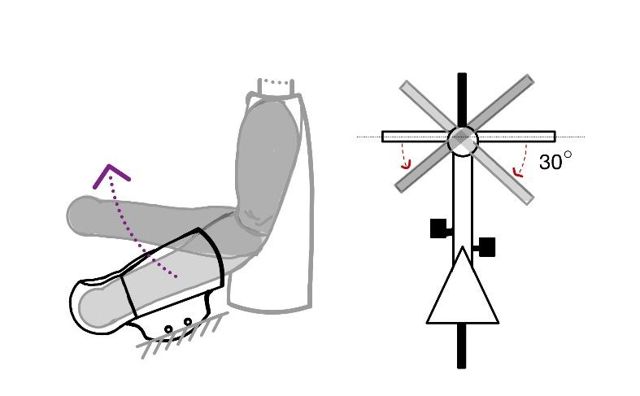
  • User must be able to disengage within 500 ms while riding.
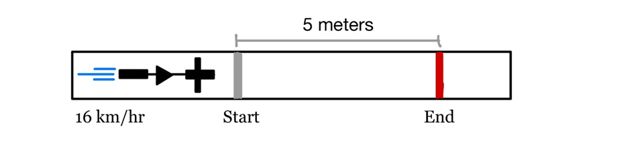
  • Able to stop within 5m with both brakes at 16 km/h.
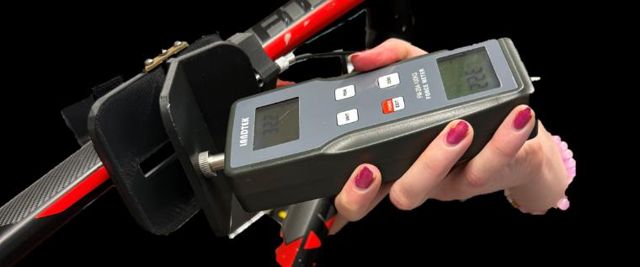
  • Brake lever depresses with 180N of force or less.
  • First-time user self-assessment of distraction/comfort.
  • Brake lever force per ISO 4210-4 §4.2, position per §4.6.5.7.
  • Survey users 1–10 on disengagement comfort; time 30 disengagement trials.
  • Steering stability per ISO 4210-2 §4.7.5–6.
  • Braking distance under 5m at 16 km/h across five trials.
ISO 4210-4; ISO 4210-2; Woods et al., 2015 (reaction time)
The system shall not cause harm to the user during regular use or failure of the device.
  • Device-user contact surface shall be skin-safe.
  • Device shall not induce pain on the residual limb.
  • Comply with ISO 22523 §4.4.4 a1–3 (fatigue, proof, and ultimate strength).
  • Industry-standard skin-safe materials per ISO 22523 §5.2.2.
  • User feedback confirms no residual-limb pain.
  • Strength testing per ISO 22523 Annex A, §A.4 Table A.1, minimum two trials per test type.
ISO 22523
The system shall be easy and intuitive to use.
  • First-time install in 45 minutes or less, with instructions.
  • Experienced user install in 15 minutes or less.
  • Time five first-time users installing with an instruction manual.
  • Time five users with three or more prior installs.
ISO 9241-210; CSULB, Usability in the Product Development Life Cycle
The system shall be cleanable. Withstand standard medical-grade cleaning compounds: alcohol wipes, antibacterial spray, and a mild-disinfectant soak. 60 cleaning cycles with no visible degradation of the device. Leimkuehler O&P, Properly Cleaning and Sanitizing Prosthetic Liners
Should be able to install and repair the device with standard tools and supplies. Installation and maintenance limited to tools commonly available in consumer and professional cycling settings. Verify all installation and maintenance procedures can be completed using only ParkTool's Recommended Tool List. ParkTool, Recommended Tool List for Full-Service Bicycle Retailers
The system should be adaptable to various bicycle models. Fit at least three handlebar styles. Test 12 different bicycles, four of each handlebar type. Coast Bike Co., 6 Most Popular Types of Handlebars and Their Features

The design

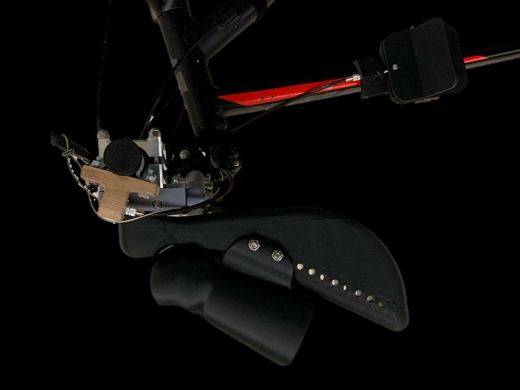
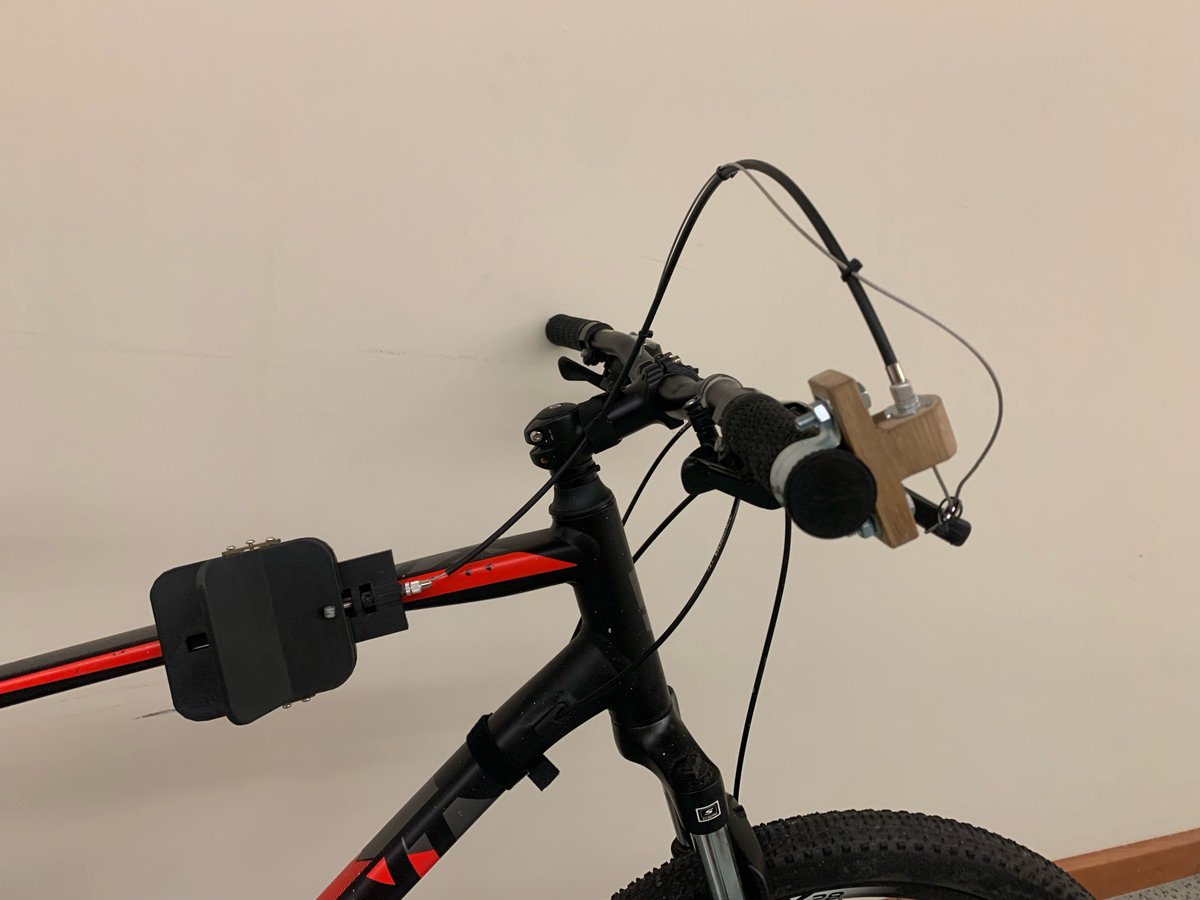
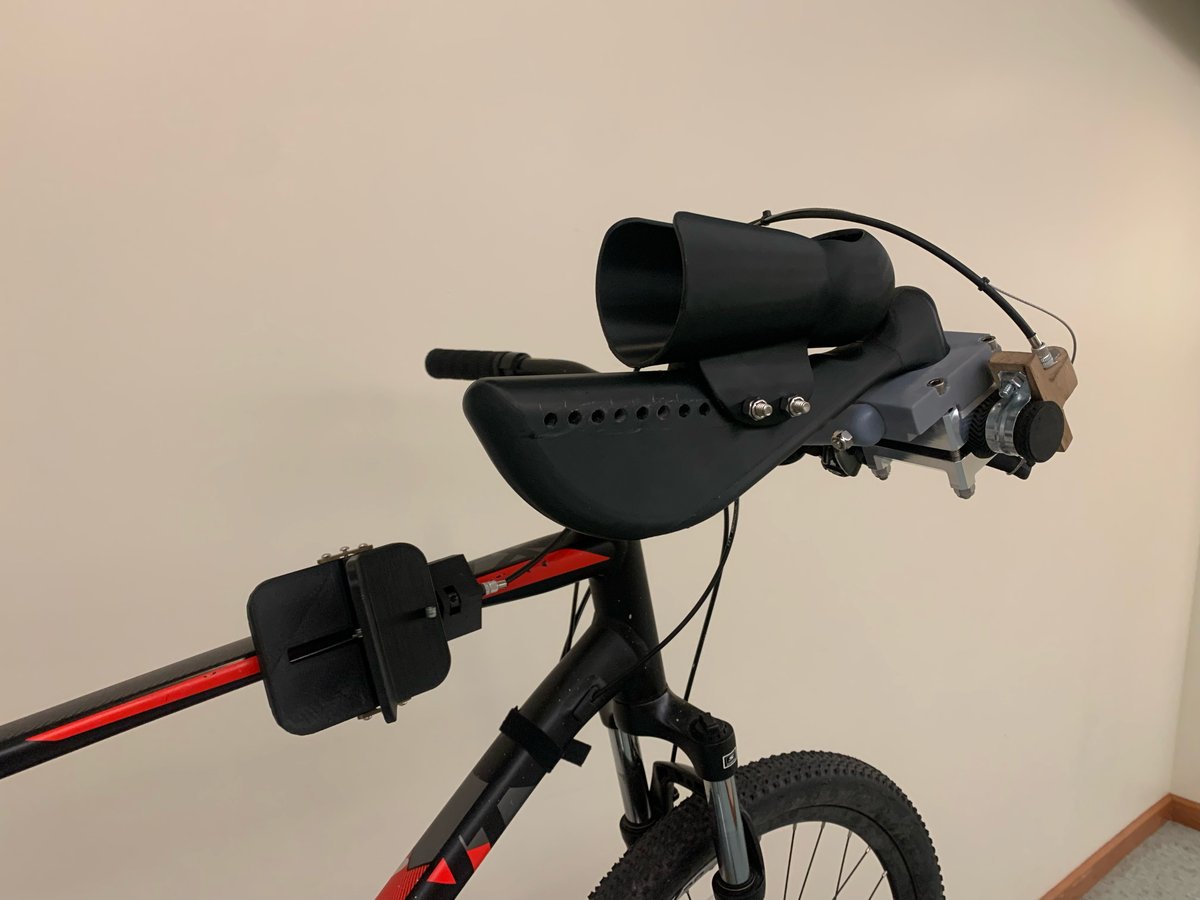
Four systems work together: a knee-actuated brake, a molded residual-limb cuff, adjustable scaffolding, and a two-point handlebar clamp — all removable, with no permanent changes to the bicycle.

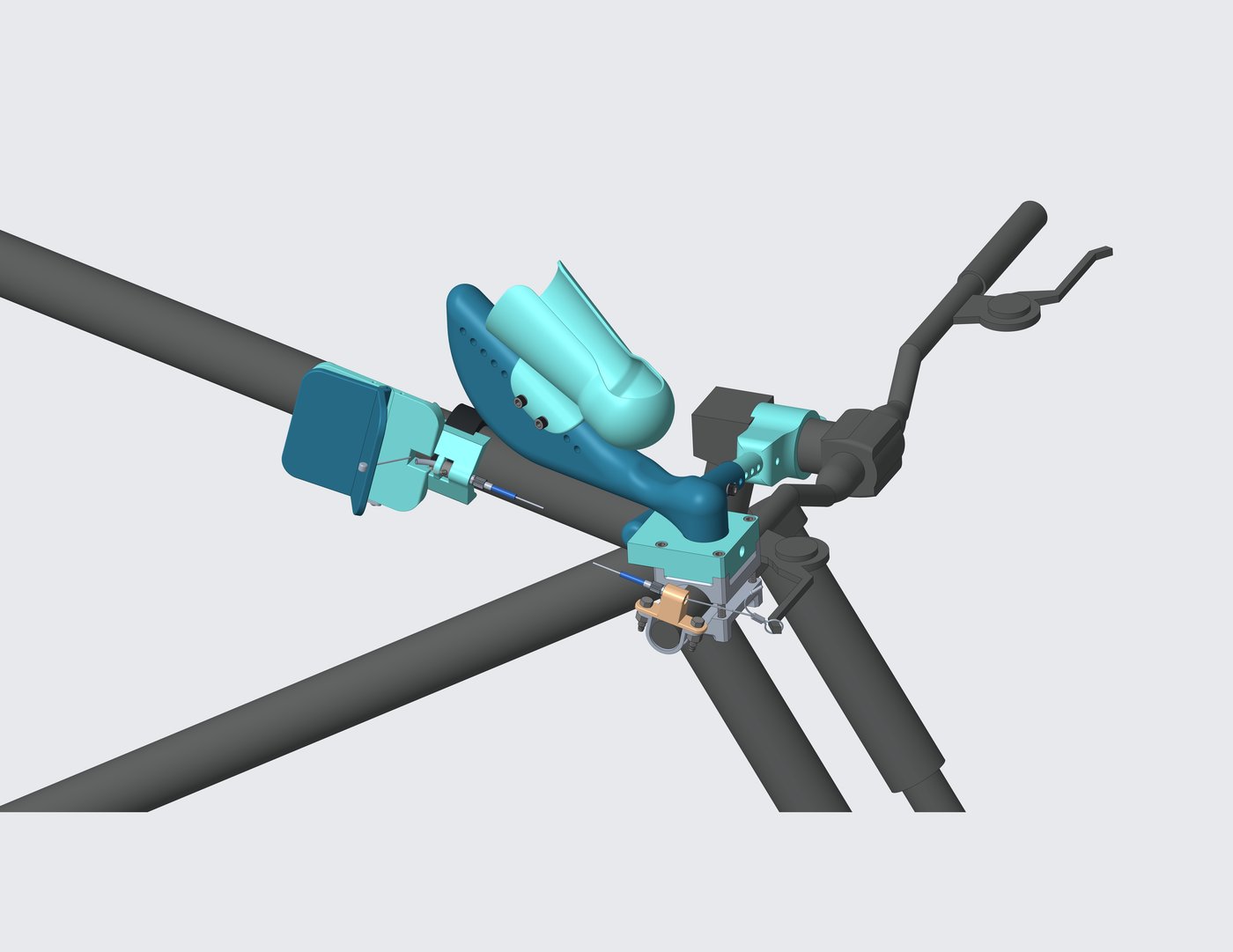
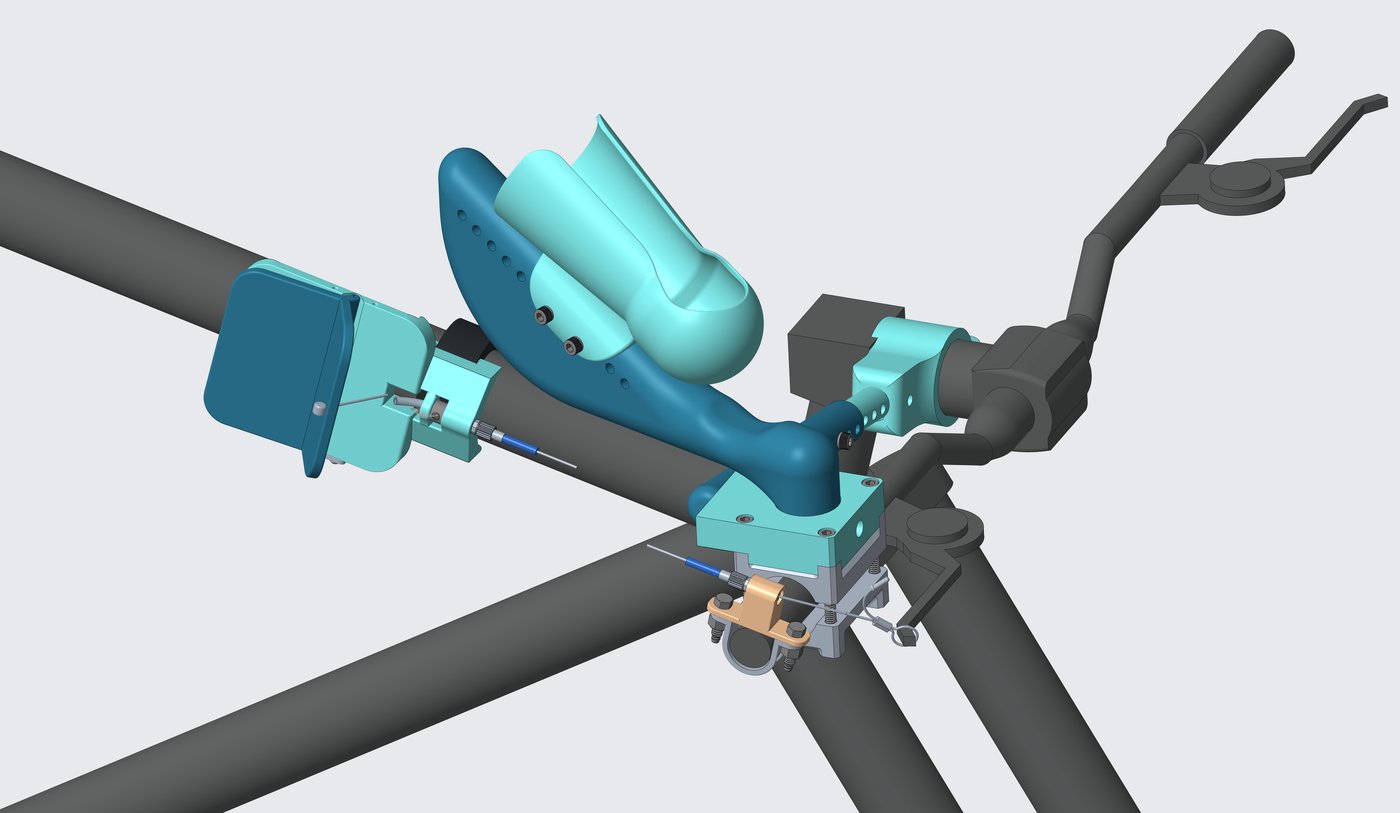
Final CAD assembly of the Cyclodapt knee-brake system mounted on drop handlebars, showing the cuff, molded scaffolding, and knee lever mechanism.
Final CAD assembly — cuff, scaffolding, and knee-lever mechanism mounted on the handlebar

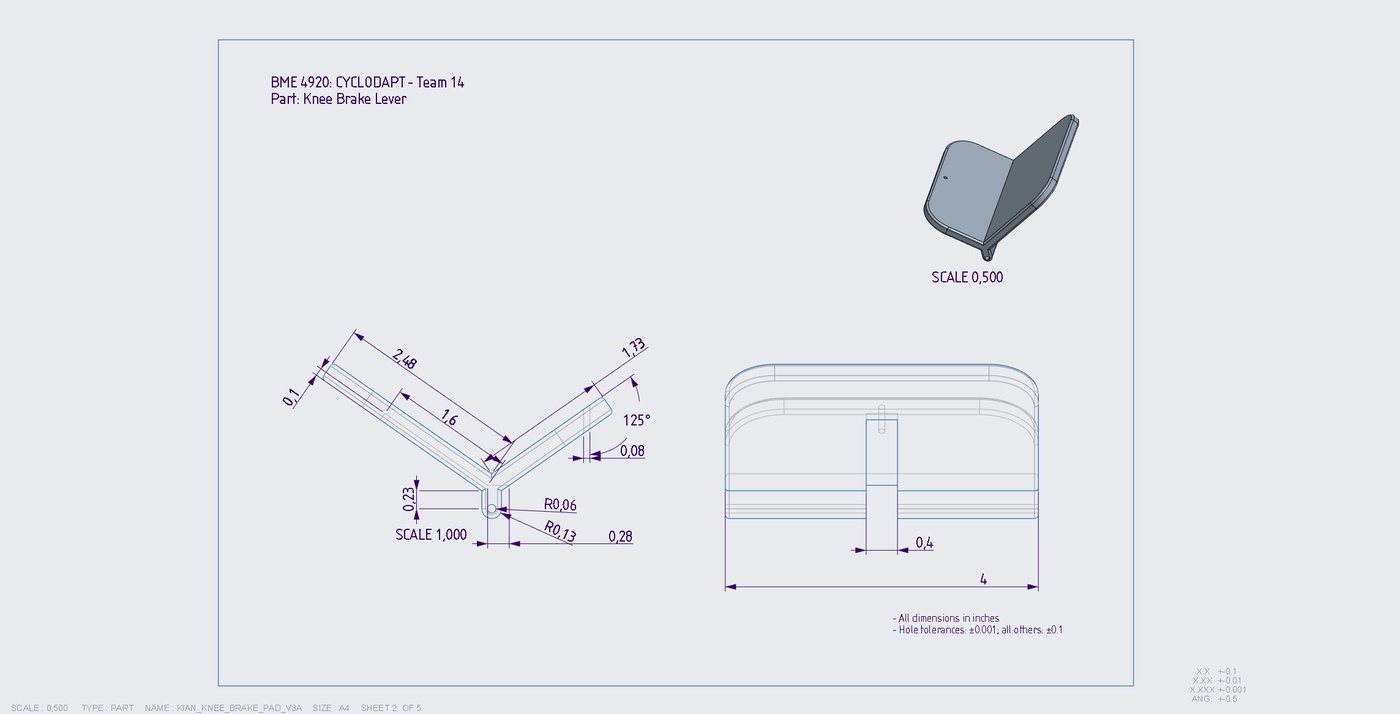
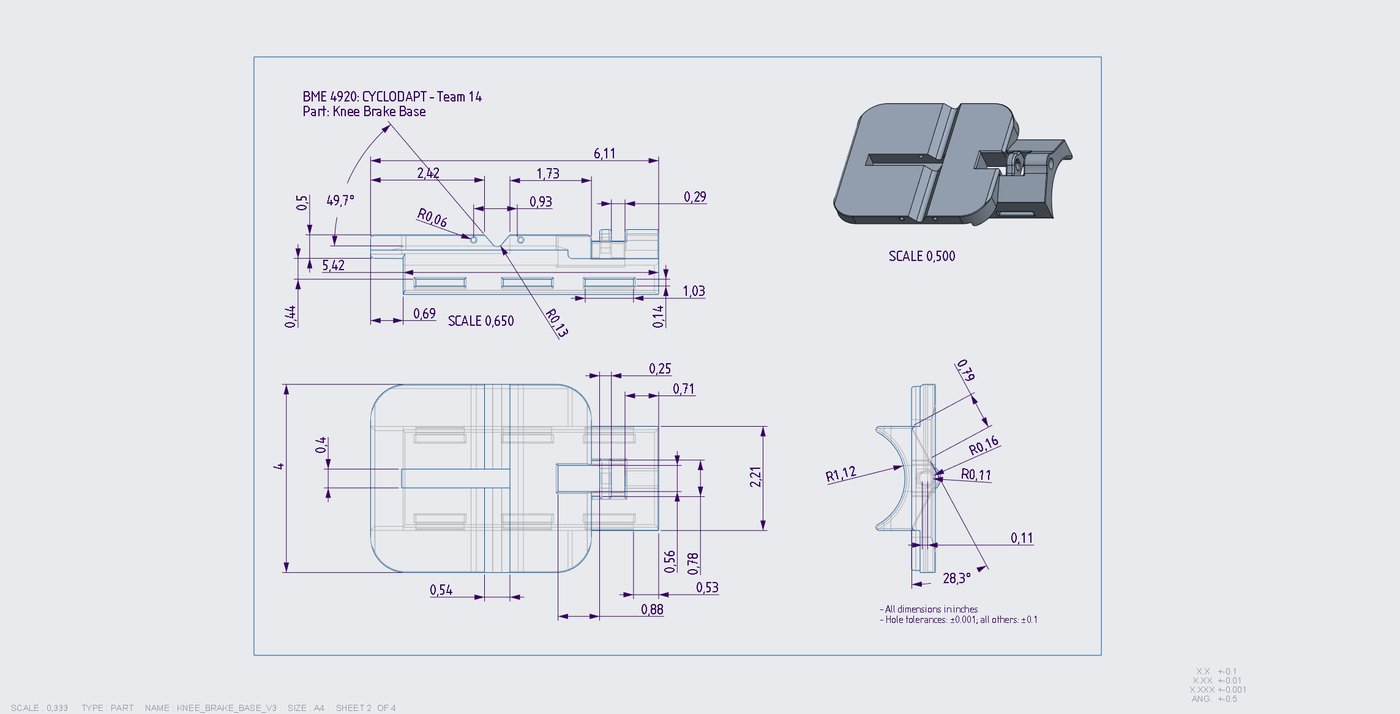
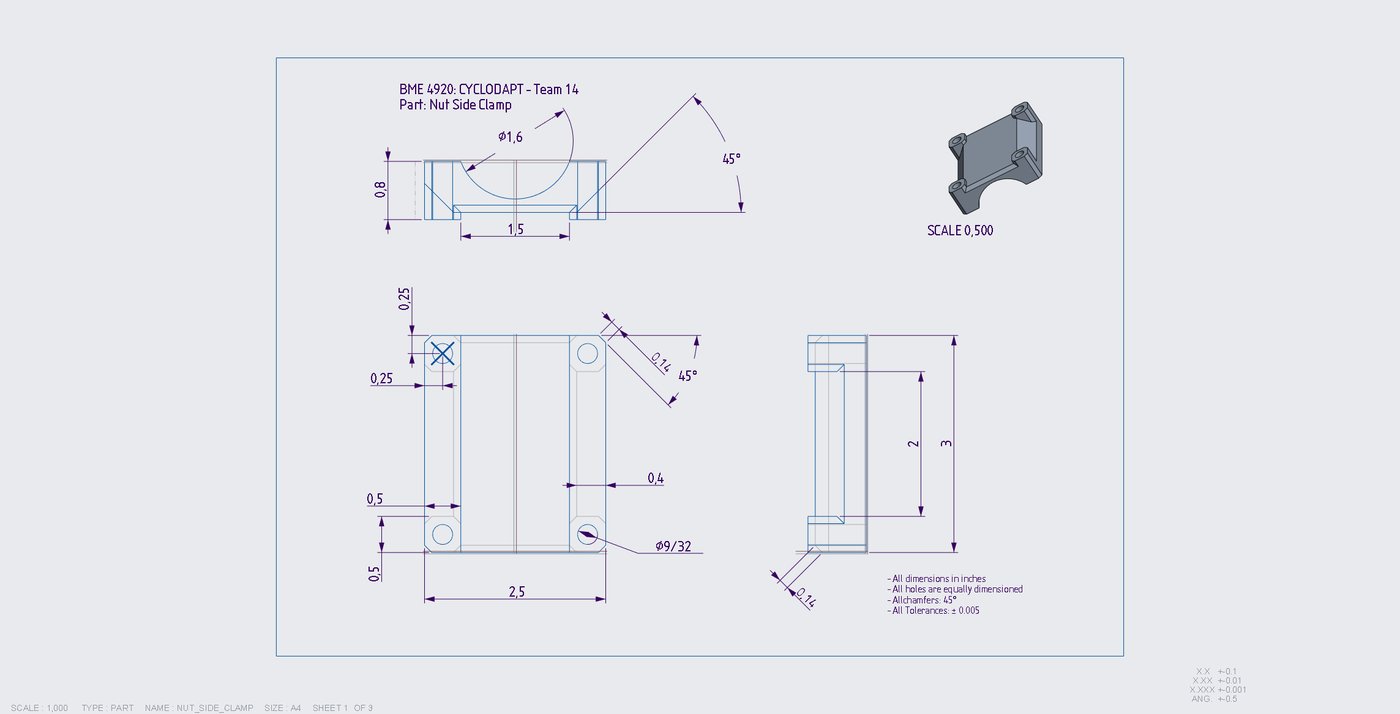
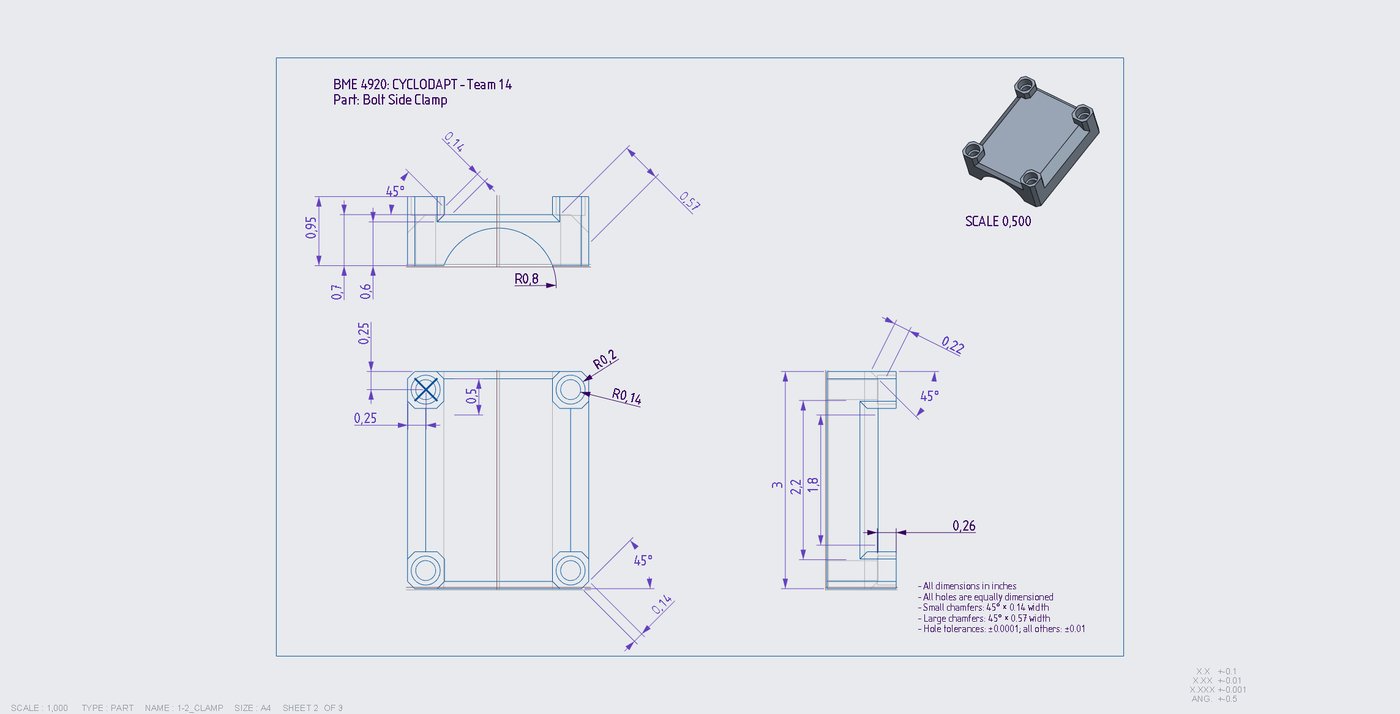
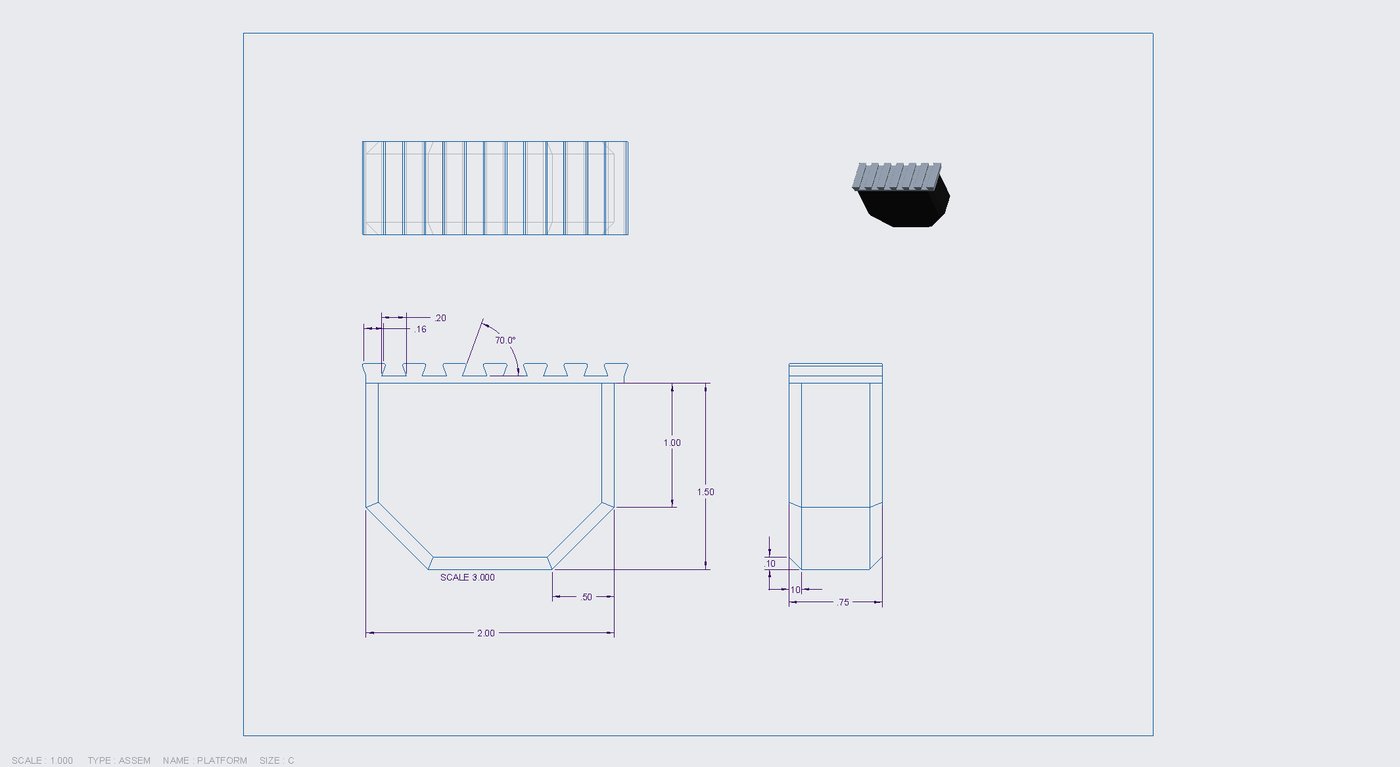
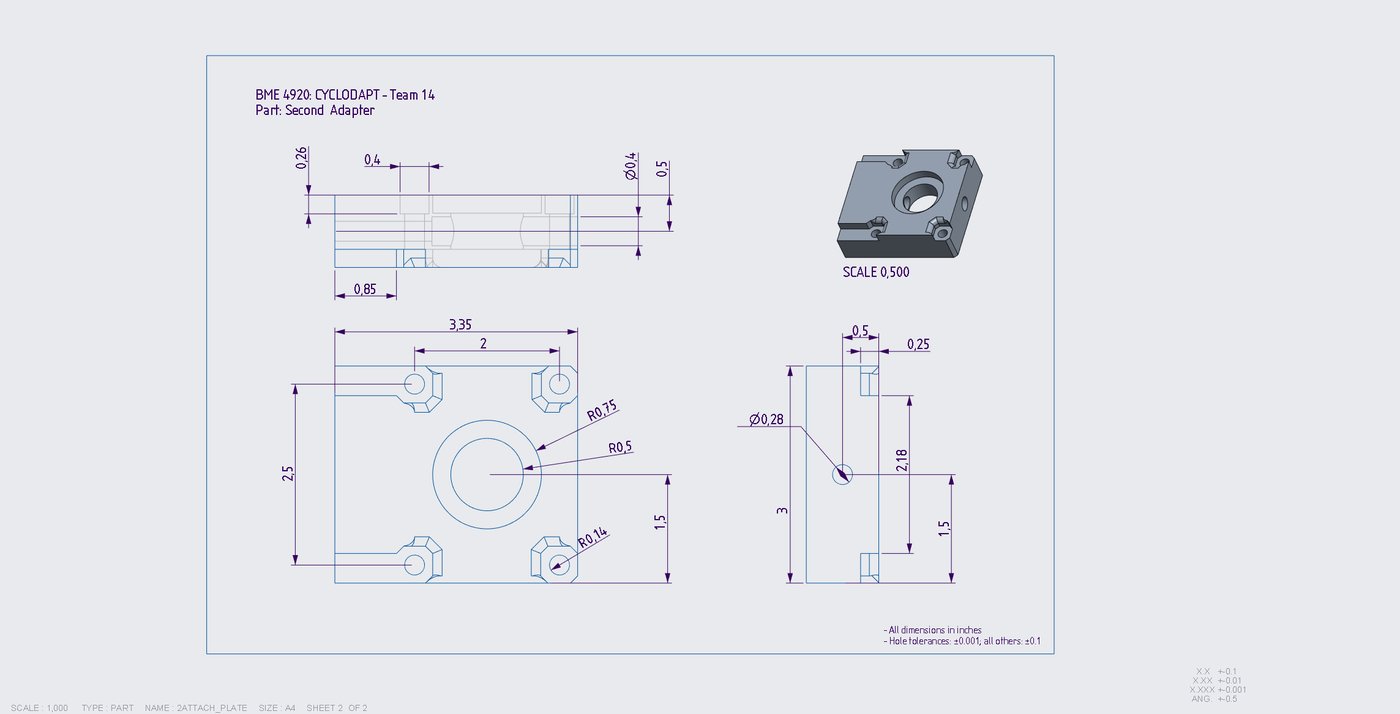
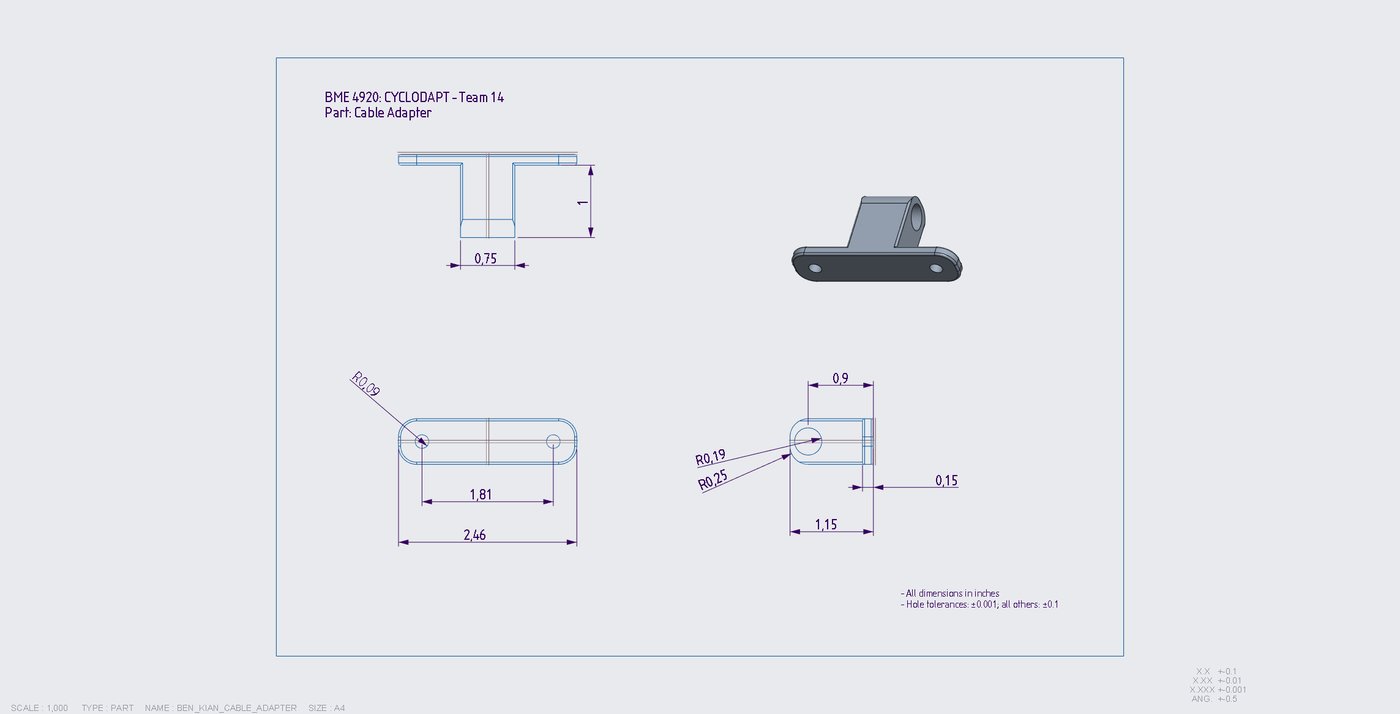
Design evolved through mentor feedback: an initial lever brake became infeasible once the cuff was closed for security, so it was replaced with a knee-lever mechanism inspired by a competitive cyclist's own adaptation. Every load-bearing part — the knee brake base and lever, the bolt- and nut-side clamps, the handlebar platform, the second adapter plate, and the cable adapter — was fully dimensioned and toleranced for manufacture; see the drawing set below.

Testing

Tests were built directly from the functional requirements and validated against ISO 4210 braking and steering standards.

avg stop distance

2.9 m

brake force

33.5 N

disengage time

0.81 s

bike compatibility

85%

Digital force gauge measuring the force required to fully apply the knee brake system.
Measuring force required to fully engage the knee brake
Diagram of the cuff disengagement motion and the handlebar steering rotation test.
Disengagement motion and steering rotation test setup
Diagram of the five-meter braking test runway, showing the bicycle traveling at 16 kilometers per hour and stopping within five meters.
Brake testing on a 5-meter runway at 16 km/h

Standard compliance

The device isn't FDA-regulated as a medical device, but it was still designed and validated against five relevant ISO standards.

ISO 4210-2 — steering safety ISO 4210-4 — braking tests ISO 9241-210 — human-centered design ISO 10993-1 — biocompatibility ISO 14971 — risk management

Risk analysis & mitigation

Every failure mode was scored for severity, occurrence, and detectability in a full FMEA. Risk priority number (RPN) is severity × occurrence × detectability — higher means higher priority.

Scaffolding fracture — RPN 150

Highest priority. Limb attachment could disconnect from handlebars mid-ride.

Secondary clamp fracture — RPN 120

Primary clamp becomes susceptible to rotation; device damage or user injury.

Brake plate insecure — RPN 100

Rear brakes unavailable; brake line could entangle pedals or the user's leg.

Knee lever fracture — RPN 90

Loss of rear braking; broken lever could entangle pedals, gears, or a limb.

View the full risk analysis & FMEA table
Failure mode Effects S Causes O Controls D RPN Recommended action
Insecure attachment of handlebar clamp resulting in downward shift of system Compromised steering, stability, and balance — potential damage to secondary clamp 8 Material failure from over-torquing or extreme stress; improper user assembly 4 Torque testing, inspection of clamp prior to use 1 32 Include expected bolt lifespan and detailed inspection instructions in the IFU
Braking lever attachment plate not secure on top tube Unable to apply rear brakes; distracts user from the road; brake line falls and entangles pedals, gears, or the user's leg/foot 10 Velcro fatigue failure, brake material degradation, or insufficient tightening 5 Physical testing after installation and prior to use; inspection for wear 2 100 Include extensive setup and inspection guidelines in the IFU
User unable to disengage from cuff (stuck in cuff) User injury including skin irritation, skin tear, tissue damage, or broken arm 10 Top opening too narrow, change in limb size, or cuff material too stiff 1 Fit testing before and after installation and prior to use 2 20 Include testing as an IFU step; design top opening with a safe width
Primary (handlebar) clamp fracture Primary attachment point for the affected limb fractures 10 Bolt fracture or stripping from over-torquing; nylon lock-nut fatigue 1 Physical testing prior to riding; visual inspection of nuts and bolts 3 30 Include regular inspection guidance and a replacement schedule in the IFU
Secondary (stem) clamp fracture or deformation Primary clamp becomes susceptible to rotation; risk of device damage or user injury 10 Wear and tear, excessive stress, incorrect installation, or improper storage 3 Stability testing; inspection of clamp prior to use 4 120 Include regular clamp inspection and storage guidelines in the IFU
Scaffolding fracture or deformation Limb attachment disconnects from handlebars; forces user into a non-ideal riding position; possible fall into handlebars 10 Wear and tear, excessive stress, incorrect installation, or improper storage 3 Stability testing; inspection of scaffolding prior to use 5 150 Include scaffolding inspection prior to every use and storage guidelines in the IFU
Telescoping tube-to-stem clamp fracture or deformation Primary clamp susceptible to rotation; impacted steering control; broken structure could interfere with the user 8 Wear and tear, excessive stress, incorrect installation, or improper storage 3 Testing and inspection of telescoping tubes prior to use 4 96 Include inspection of the secondary attachment arm and storage guidelines in the IFU
Insufficient brake line tension Inability to apply rear brakes; distracts user from the road 7 Wear along the exposed brake line, loosened crimp, or improper installation 2 Brake force testing; fully depress the brake line prior to use 1 14 Include brake line security inspection and strict IFU tightening guidance
Knee brake lever fracture or deformation Inability to apply rear brakes; brake line could fall and entangle pedals, gears, or the user's leg/foot 10 Wear and tear, excessive stress, incorrect installation, or improper storage 3 Testing and inspection of the brake lever prior to use 3 90 Include brake lever inspection in the IFU
Accidental braking Interrupted riding; user could fall off the bike 10 Improper installation, environmental interference, or accidental force application 3 Fit testing before and after installation and prior to use 1 30 Design the knee brake lever at minimum protrusion length; include a detailed installation guide

Impact

Bicycles are one of the most globally accessible forms of transportation, often costing as little as $100–200 — but that access disappears for people with an upper limb difference unless they can afford thousands of dollars in prosthetics or specialty equipment. Cyclodapt lowers that barrier for a community of over 42,500 people in the US alone, supporting independence, health, and a more sustainable mode of transportation.

key words

Pugh charts needs statement development market research ISO 4210 FMEA / risk analysis Creo CAD modeling engineering drawings 3D printing assistive tech biomedical engineering molding and casting advanced fabrication methods thermoplastic molding injection molding human-centered design biocompatibility testing wearable device design accessibility engineering design verification & testing prototype iteration standards compliance user-centered testing